Eye Floaters: Causes and Treatment Options in Singapore
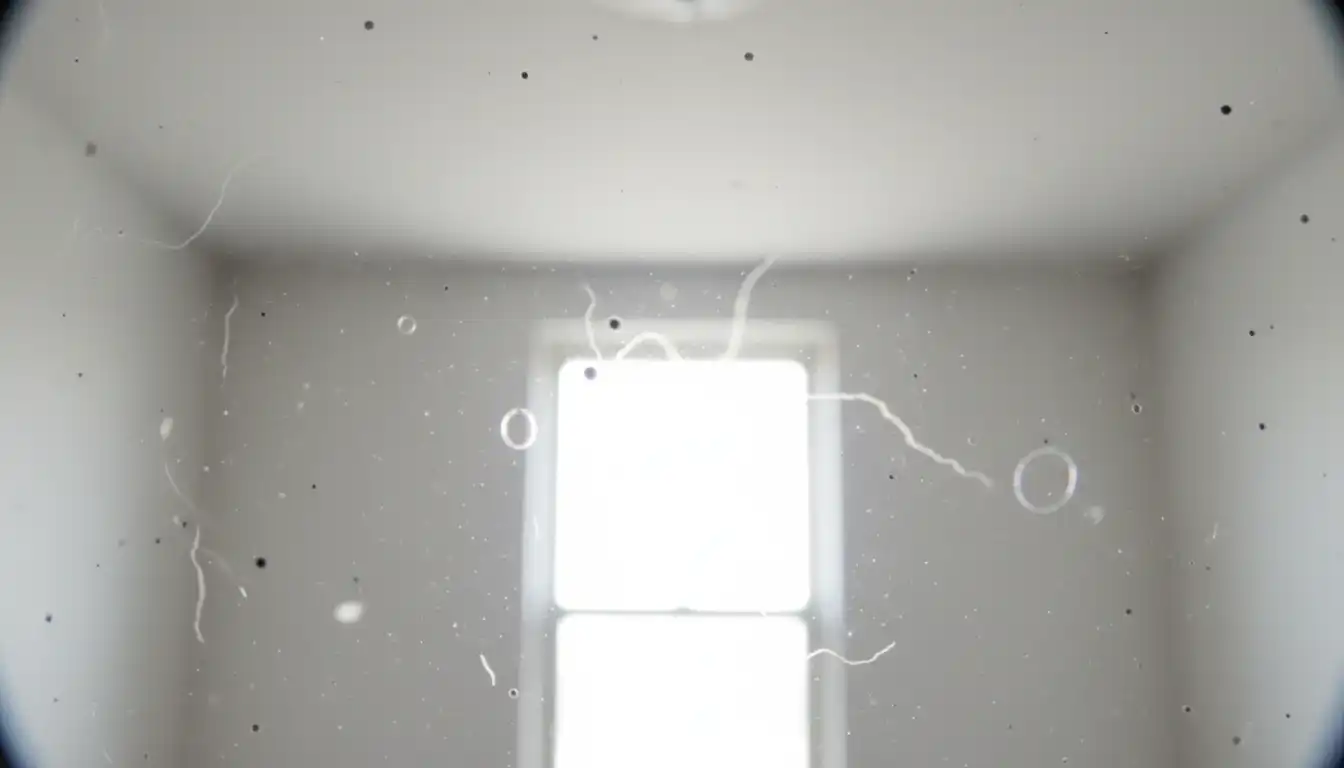
Are you seeing small specks, threads, or cobwebs drifting across your vision? These common visual disturbances, known as eye floaters, often prompt worry. While most are a harmless nuisance, a sudden onset can be a genuine medical emergency requiring immediate attention. Understanding the difference is crucial for protecting your sight.
At Cornerstone Eye Centre in Novena, Dr. Roy Tan provides a diagnostic approach to determine the true cause of your eye floaters and recommend the most effective path forward.
What Causes Eye Floaters and Why They Form at a Young Age
Eye floaters develop when the vitreous humour undergoes structural changes, but the triggers and timing vary considerably. Understanding why floaters appear helps you recognise normal ageing from potentially serious conditions.
The Primary Cause: Posterior Vitreous Detachment (PVD)
The most common process that generates new eye floaters is Posterior Vitreous Detachment (PVD). This natural, age-related event occurs when the shrinking vitreous gel separates entirely from the retina, the collagen fibres condense into the stringy clumps we perceive as eye floaters.
- In early life, the vitreous gel is firmly attached to the retina at various points.
- As liquefaction progresses, the central part of the vitreous becomes watery, causing the gel structure to collapse.
- Eventually, the entire gel pulls away from the back wall of the eye.
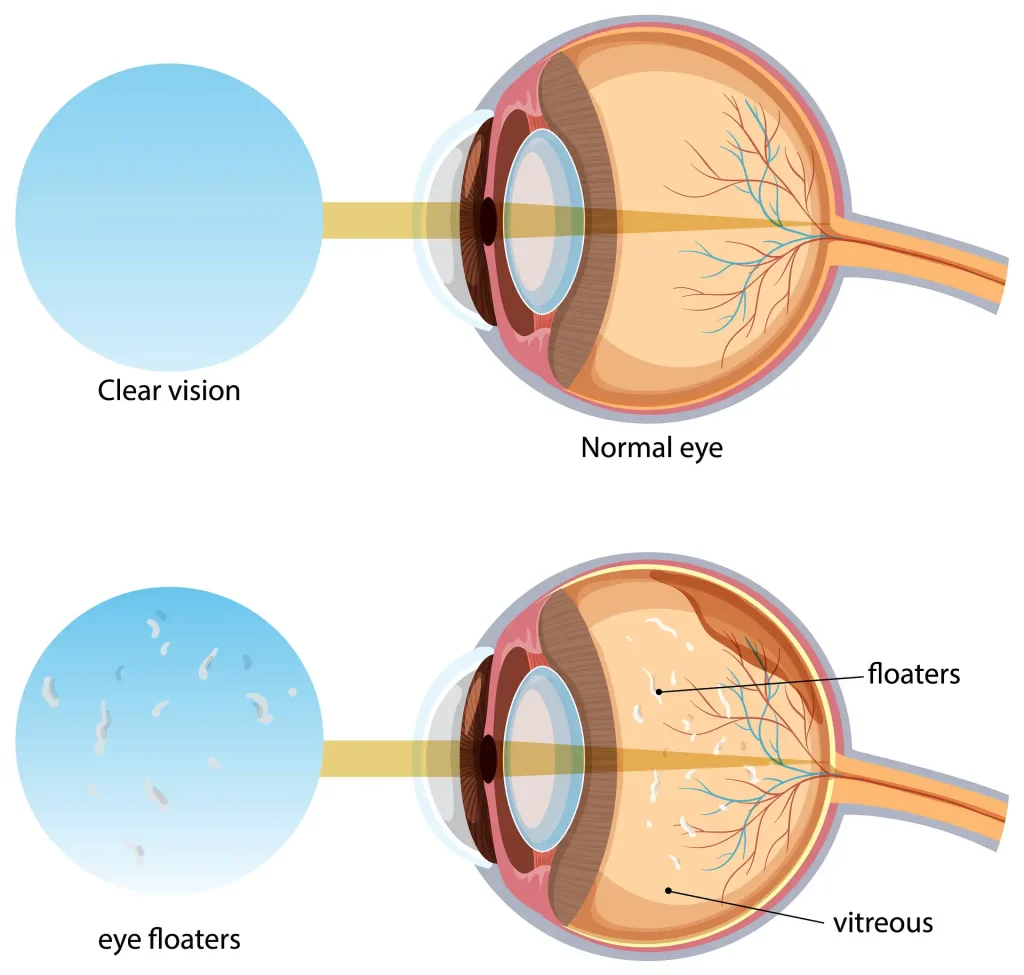
When this detachment happens, a large, ring-shaped floater called a Weiss Ring is often released into the central vision. While the sudden appearance can be startling, a PVD that occurs cleanly, without tearing the retina, is generally benign and does not require treatment. It is a very common condition, particularly in people over the age of 50.
Risk Factors and Causes in Younger Patients (Under 40)
While PVD is an age-related process, eye floaters can and do occur in young people. This is particularly relevant in Singapore, given the high prevalence of myopia (short-sightedness).
Individuals with high myopia (typically -6.00 Diopters or more) are at greater risk of developing eye floaters at a younger age, sometimes even in their 20s. This is because the elongated eyeball shape stretches and thins the retina, causing the vitreous to liquefy and collapse earlier than usual.
Other non-age-related causes include:
- Eye Injury or Trauma: A hard knock to the head or eye can instantly detach the vitreous or cause small bleeds.
- Inflammation (Uveitis): Inflammation inside the eye can release white blood cells and debris into the vitreous, which are perceived as small, dark floaters.
- Vitreous Haemorrhage: Bleeding from abnormal retinal blood vessels (often due to conditions like diabetic retinopathy) can result in a sudden shower of fine, reddish-black specks.
Flashes and Floaters: The Red Flags That Demand Urgent Care
Whilst most floaters are harmless, certain symptoms indicate potential sight-threatening emergencies requiring same-day evaluation. Recognising these warning signs could prevent permanent vision loss.
Differentiating Harmless Floaters from a Retinal Emergency
Whilst most floaters are harmless, certain symptoms indicate potential sight-threatening emergencies requiring same-day evaluation. Recognising these warning signs could prevent permanent vision loss.
Critical Warning Signs:
1. Sudden shower of new floaters: A dramatic increase in floaters appearing within hours or days, particularly small dark spots or specks, suggests active vitreous or retinal changes
2. Flashes of light (photopsia): Brief sparkles or lightning-like streaks in peripheral vision, especially in dim lighting, indicate vitreous traction on the retina
3. Dark shadow or curtain: A fixed grey or black area blocking part of your visual field signals possible retinal detachment in progress
4. Floaters following eye trauma: Any floaters appearing after direct eye injury require immediate examination to rule out serious internal damage
The presence of any combination of these symptoms (particularly floaters with flashes) demands urgent professional evaluation. Time becomes critical when the retina is involved.
Harmless floaters, in contrast, remain relatively stable. They may drift with eye movement but don’t multiply rapidly or accompany other symptoms. Long-standing floaters that haven’t changed over months or years rarely indicate emergencies.
The Danger: Retinal Tears and Detachment
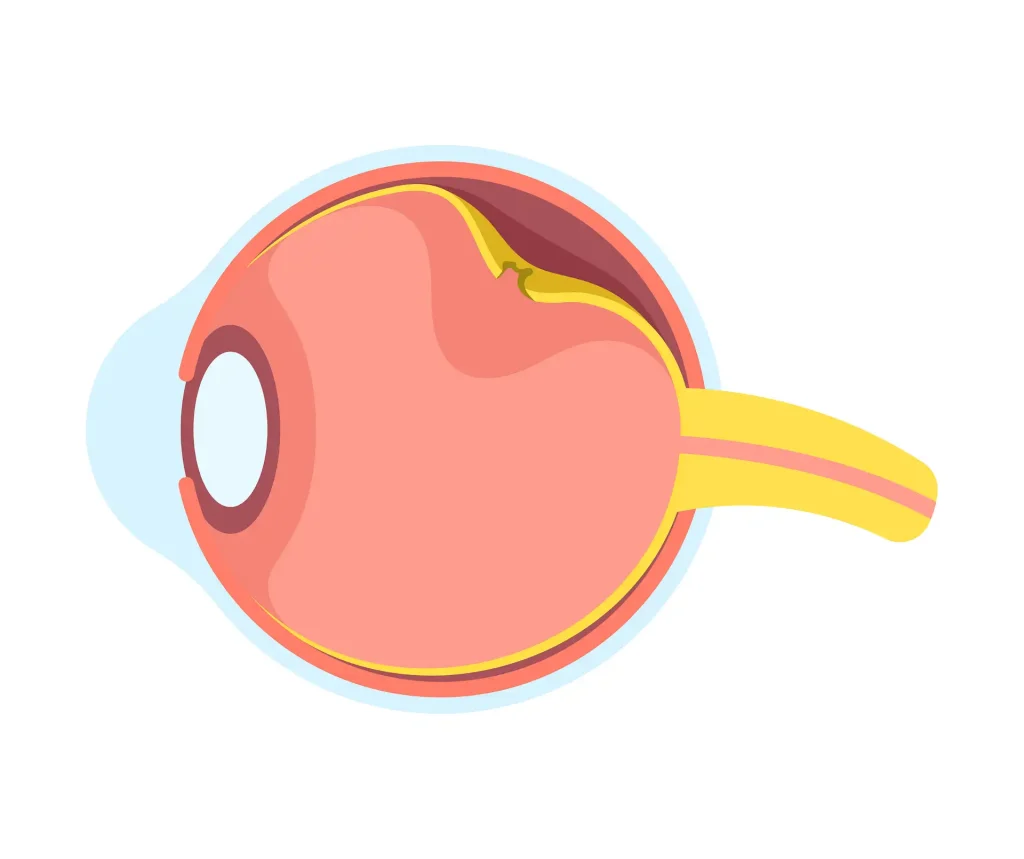
A retinal tear occurs when the vitreous gel, during its detachment (PVD), exerts too much traction on the retina, causing a break in the tissue. This tear itself is typically treatable with an in-office laser procedure, which essentially welds the edges of the tear back down to prevent fluid from getting underneath.
However, if a retinal tear is missed, fluid can seep through, separating the light-sensing cells of the retina from their underlying blood supply, leading to retinal detachment. This condition is a surgical emergency because, without prompt reattachment, the retinal cells starve, resulting in permanent vision loss in that area.
Why Early Detection Matters:
- Retinal Tears detected early can be secured with a simple, quick laser retinopexy (welding) procedure.
- Retinal Detachments require complex operating theatre surgery (like vitrectomy or scleral buckling).
- The earlier the retina is reattached, the higher the chance of retaining useful vision.

Can You Get Rid of Eye Floaters Naturally? (Non-Surgical Management)
Many people search for natural remedies to eliminate floaters without surgery. Whilst no method completely removes existing floaters, several strategies help most people adapt successfully.
Learning to Live with Floaters (The Brain’s Role)
A common question is: “do eye floaters ever go away?” The physical clumps rarely disappear entirely, but your perception of them usually diminishes over time. This is due to a remarkable process called Neuroadaptation.
The brain learns to filter out constant, non-threatening visual inputs. When floaters are stable and harmless, the brain begins to ignore the shadows they cast, effectively removing them from your conscious sight. This process can take several weeks or months.
Practical Tips for Coping:
- Move Your Eyes: If a floater drifts into your central vision, try moving your eyes up and down repeatedly. This creates currents in the vitreous humour, helping to shift the floater out of the visual axis.
- Reduce Contrast: Wear dark sunglasses or polarised lenses when outdoors. Floaters are most noticeable against bright, high-contrast backgrounds (like a white wall or clear sky).
- Practice Acceptance: Once a full medical examination rules out danger, accepting the floaters as a mild annoyance can accelerate the process of neuroadaptation.
Diet, Hydration, and Eye Health (Supporting the Vitreous)
While there is no proven “cure” through diet, optimizing your eye health is always beneficial. The vitreous humour is primarily water and collagen, so supporting its integrity is logical.
Focus on a diet rich in nutrients known to protect retinal and vascular health:
- Hydration: Since the vitreous is 99% water, maintaining excellent hydration can help ensure the vitreous gel retains its optimal fluid consistency.
- Antioxidants: Vitamins C and E, Lutein, Zeaxanthin, and Omega-3 fatty acids are critical for maintaining the health of the retina and the surrounding structures. These are found in abundance in leafy green vegetables, colourful fruits, nuts, and oily fish.
- Vitreous Support: Certain specialist-recommended supplements have been used to lessen the effects of or reduce vitreous floaters. Always discuss any supplement regimen with Dr. Tan to ensure it does not interact with existing medications or conditions.
Why Choose Dr Roy Tan at Cornerstone Eye Centre, Novena
Choosing an ophthalmologist who offers comprehensive, balanced, and personalised care is essential when dealing with eye floaters. Dr. Roy Tan’s meticulous approach ensures your vision is protected.
At the Cornerstone Eye Centre in Novena, Dr. Roy Tan offers a precise and patient-focused approach to eye floaters. We understand that for many, the anxiety about floaters is as bothersome as the floaters themselves.
Dr. Tan’s primary focus is always on diagnostics, ruling out the dangerous, sight-threatening conditions first. His diagnostic protocol for eye floaters includes:
- Comprehensive Dilated Eye Examination: This allows Dr. Tan to inspect the entire retina in detail to confirm the absence of any tears or bleeding.
- Advanced Imaging: Utilising Optical Coherence Tomography (OCT) or B-Scan Ultrasound where necessary to assess the structure of the retina and vitreous.
If you are experiencing new eye floaters or flashes, or if long-standing floaters are starting to impair your daily life in Singapore, a detailed consultation is your safest next step.
Ready for a comprehensive eye check up?
Dr Roy Tan at Cornerstone Eye Centre (Novena) offers comprehensive eye examinations. Whether you need routine screening, cataract evaluation, or management of complex eye conditions, our team provides personalised care tailored to your specific needs and concerns.
Our thorough examinations include all necessary testing to assess your eye health accurately, with clear explanations of findings and treatment options. We take time to answer your questions and ensure you understand your eye health status and any recommended next steps.
Book a Cataract & Glaucoma Screening for $88
Don’t wait for symptoms to appear before taking action. Early detection is key to preserving your vision.
At Dr Roy Tan’s clinic, we offer a comprehensive Cataract & Glaucoma Screening for just $88. This screening is designed to assess your eye health thoroughly, identify any early indicators of glaucoma or cataracts, and discuss your personalised options if either condition is detected.