Chalazion Treatment Singapore – Comprehensive Patient Guide
Summary
If you notice a painless, firm lump on your eyelid that persists despite warm compresses, you are likely dealing with a chalazion—a blocked oil gland that differs significantly from a painful, infected stye.

About Dr Roy Tan
Dr Roy Tan, Senior Consultant Ophthalmologist at Asian Healthcare Specialists, clarifies the key symptoms to look out for and guides you through the precise medical and surgical treatment options available in Singapore to resolve this common eyelid condition effectively.
Introduction
Have you noticed a small, painless lump on your eyelid that just won’t go away? You might be dealing with a chalazion. While it’s usually harmless, it can be a persistent and frustrating cosmetic concern. If you’re in Singapore and searching for clear, practical solutions, you’ve come to the right place.
At Asian Healthcare Specialists (AHS), Consultant Ophthalmologist Dr Roy Tan provides compassionate and expert care for a range of eye conditions, including chalazia. This guide will walk you through everything you need to know—from identifying a chalazion to exploring the effective treatment options available right here in Singapore.
What Is a Chalazion? Recognising the Symptoms
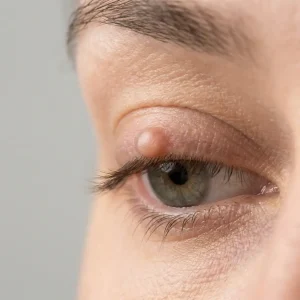 A chalazion is a small, slow-growing lump or cyst that forms on the eyelid. It occurs when one of the tiny meibomian glands—which produce the oily part of your tears to keep your eyes lubricated—becomes blocked.
Think of these glands like tiny pores. When the oil inside them thickens and can’t flow out, it builds up, leading to inflammation and the formation of a firm, round bump. It’s your body’s way of walling off the irritation.
So, how do you know if it’s a chalazion? Here are the common symptoms of a chalazion to look out for:
- A noticeable lump on the upper or lower eyelid, often away from the eyelid margin.
- Initially, there might be slight tenderness, redness, or swelling.
- As it develops, it typically becomes a painless lump.
- It can cause blurred vision if it grows large enough to press on the eyeball.
- Mild irritation or a feeling of heaviness on the eyelid.
Understanding these signs is the first step toward getting the proper care.
Chalazion vs Stye: What’s the Difference?
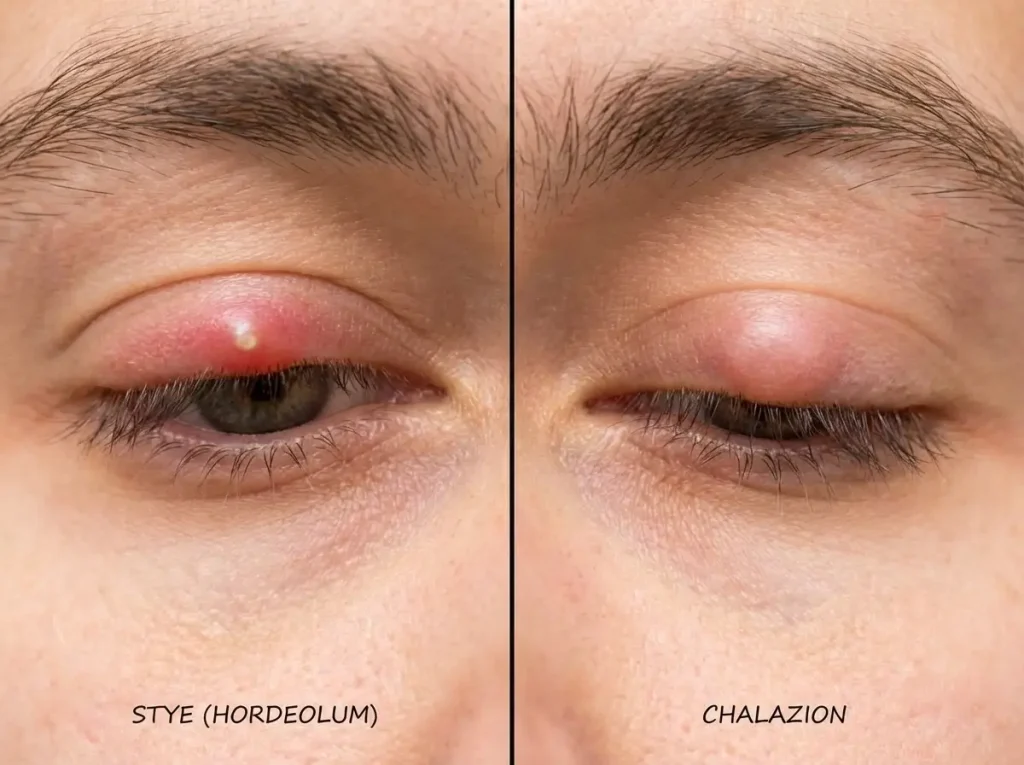
This is a common point of confusion! Many people use the terms “chalazion” and “stye” interchangeably, but they are different conditions. Knowing the distinction can help you understand what you’re dealing with.
| Feature | Chalazion | Stye (Hordeolum) |
|---|---|---|
| Cause | Blocked meibomian (oil) gland. | Bacterial infection of an oil gland or eyelash follicle. |
| Location | Deeper within the eyelid tissue. | On the eyelid margin, often at the base of an eyelash. |
| Pain Level | Usually, it is painless after the initial phase. | Typically tender and painful. |
| Appearance | Firm, rubbery lump. No visible head. | Red, painful bump, often with a pus-filled centre (whitehead). |
A simple way to remember: a stye is often an acute, painful infection, while a chalazion is a more chronic, painless blockage. A stye can sometimes develop into a chalazion if the infection subsides, but the blocked material remains.
Effective Chalazion Treatment Options in Singapore
The good news is that most chalazia resolve on their own with a bit of patience and care. However, if yours is persistent, causing vision problems, or simply bothering you, several chalazion treatment options are available. At our Singapore clinics, Dr Roy Tan will recommend an approach based on the size and duration of your chalazion.
Initial and Home Care Management
For a new or small chalazion, conservative management is often the first line of defence.
- Warm Compresses: This is the highly recommended home remedy. Apply a clean, warm cloth to your closed eyelid for 10-15 minutes, 3-4 times a day. The warmth helps to soften the hardened oil, allowing it to drain naturally. Be consistent—this requires patience!
- Gentle Lid Massage: After using the warm compress, gently massage the area with clean fingers to help express the contents of the blocked gland.
- Eyelid Hygiene: Keeping your eyelids clean is crucial. Use a mild, tear-free shampoo or a dedicated eyelid cleanser to wipe along the lash line to prevent further blockages gently.
Professional Medical Treatments
If home care isn’t enough after a few weeks, or if the chalazion is particularly large, it’s time to see a specialist.
- In-Clinic Steroid Injection: For inflamed chalazia, a small corticosteroid injection can be very effective. This helps significantly reduce inflammation, often causing the lump to resolve over a week or two. This is a quick procedure performed in the clinic.
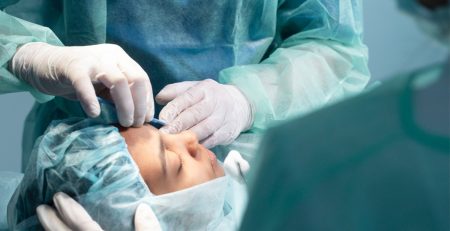
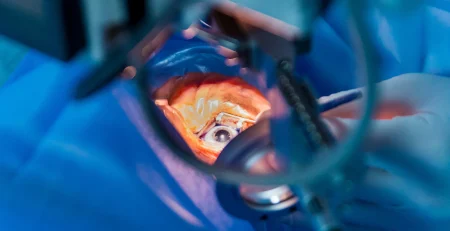
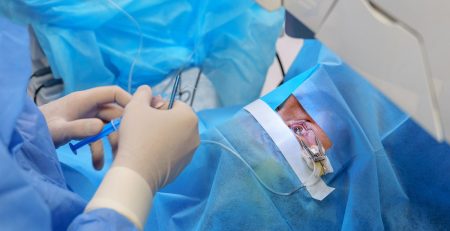
- Chalazion Surgery (Incision and Curettage): For persistent or unresponsive chalazia, a minor surgical procedure may be recommended. Performed under local anaesthesia, Dr Roy Tan will make a tiny incision on the inner eyelid to drain the contents of the cyst. This leaves no visible scar and typically provides immediate relief. The procedure is straightforward, and patients can go home the same day.
Why Choose Dr Roy Tan and AHS for Your Chalazion Care in Singapore?
When it comes to your eye health, you want a team that combines expertise with genuine care.
Dr Roy Tan, as part of the multidisciplinary Asian Healthcare Specialists group, offers a patient-centred approach. We understand that a chalazion, while common, can be a source of discomfort and self-consciousness. Our focus is on providing clear explanations and treatment options that align with your needs, ensuring you feel informed and comfortable every step of the way.
Our clinics in Singapore are equipped to provide a full spectrum of care, from initial diagnosis to minor surgical procedures, all under one roof.
Frequently Asked Questions (FAQs) About Chalazion
How long does it take for a chalazion to go away?
With consistent warm compresses, a small chalazion may improve within a few weeks. Larger or more persistent ones can last for several months without treatment.
Can I pop a chalazion like a pimple?
No, you should never try to squeeze or pop a chalazion. This can damage your eyelid, push the infection deeper, and make the inflammation much worse. Always allow it to drain naturally or let a medical professional handle it.
Does poor hygiene cause chalazions?
Not necessarily. While good eyelid hygiene can help prevent them, chalazions are often associated with conditions such as blepharitis (inflammation of the eyelids) or rosacea. They can also occur without any apparent cause.
When should I see a doctor for a chalazion?
It is advisable to consult an ophthalmologist if:
- The chalazion does not improve with home care after a few weeks.
- It is growing huge and affecting your vision.
- The redness and swelling spread to other parts of your face.
- You experience recurring chalazia.
Is chalazion surgery painful?
The procedure is performed under local anaesthesia, so you will not feel pain. You may feel some slight pressure. Post-procedure, mild discomfort or bruising may occur, which usually resolves quickly.
Don’t Let a Persistent Eyelid Lump Affect Your Comfort
If you suspect you have a chalazion, seeking timely advice from an eye specialist is the recommended course of action. Consultant Ophthalmologist Dr Roy Tan is here to help with a compassionate approach and clinical expertise.
Take the first step towards clearer, more comfortable vision.