
Presbyopia in Singapore: Causes, Symptoms & Treatment Options
Do you find yourself holding your smartphone at arm’s length just to read a text message? Perhaps you have noticed that the menu at your favourite restaurant seems unusually blurry under dim lighting. These moments often mark the arrival of presbyopia, a natural shift in vision that affects almost everyone as they approach their 40s.
In Singapore, this condition is widely known as 老花眼 (Lǎo Huā Yǎn). While the name suggests aging eyes, it is actually a biological milestone rather than a disease. Understanding the causes and symptoms is the first step toward regaining the clear, effortless vision you once enjoyed. Modern ophthalmology now offers treatments that go beyond simple reading glasses, ranging from advanced lens implants to high-precision laser techniques.
What is Presbyopia and Why Does it Happen?
Presbyopia is a progressive condition where the eye gradually loses its ability to focus on nearby objects. Unlike myopia (short-sightedness) or hyperopia (long-sightedness), which are often related to the shape of the eyeball, presbyopia is a functional change within the eye’s internal focusing mechanism.
The loss of lens flexibility after 40
Inside the eye, sitting just behind the iris, is the crystalline lens. When you are young, this lens is soft and flexible. Through the action of the ciliary muscles, it changes shape easily by becoming rounder to focus on a book and flatter to see a distant landmark.
As we age, the proteins within the lens begin to change, causing it to harden and lose its elasticity. By the time most people reach their early 40s, the lens is no longer flexible enough to zoom in on close-up tasks. This stiffness means the light entering the eye focuses behind the retina instead of directly on it, resulting in the blurred near vision characteristic of presbyopia .
Common presbyopia symptoms in daily life
The onset of presbyopia is usually gradual. You might notice subtle changes before the blur becomes constant. Common signs include:
- The Short Arm Syndrome: A reflexive need to hold reading materials, phones, or tablets further away to bring them into focus.
- Eye Strain and Fatigue: Feeling a dull ache or heaviness in the eyes after prolonged periods of near work, such as sewing or computer use.
- Dim Light Struggles: Finding that you need much brighter light than usual to see small print clearly.
- Transition Delays: A brief period of blurred vision when looking up from a book to see something in the distance, or vice versa.
Can you prevent presbyopia?
It is a common misconception that eye exercises or specific vitamins can stop presbyopia. Because the condition is caused by the unavoidable structural hardening of the lens, it cannot be prevented or reversed.
While maintaining a diet rich in antioxidants and protecting your eyes from UV rays supports general ocular health, the stiffening of the lens is a universal biological process. The good news is that while it cannot be prevented, it can be managed using modern technology.
Non-Surgical Management and Lifestyle Support for Presbyopia
Not everyone is suitable for surgery. There are several non-invasive ways to manage the daily frustrations of presbyopia.
Pharmacological management: Presbyopia eye drops
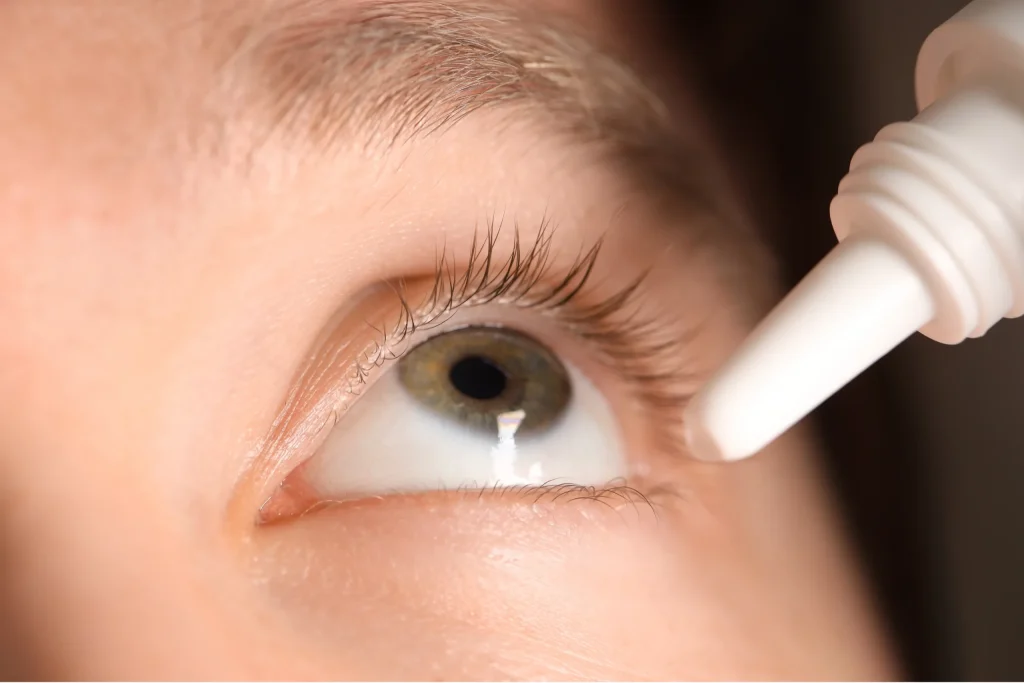
A recent development in eye care is the introduction of prescription eye drops designed specifically for presbyopia.
- How they work: These drops utilise a miotic effect, which temporarily constricts the pupil. This creates a pinhole effect, similar to how a camera lens works when you decrease the aperture.
- The Result: By making the pupil smaller, the depth of focus is increased, allowing near objects to appear sharper for several hours.
These drops are a daily-use option rather than a permanent treatment. They are most effective for individuals with mild to moderate symptoms who want a break from glasses for specific occasions.
Optical solutions for presbyopia: Multi-focal spectacles
Spectacles remain the most common way to manage presbyopia. Modern lens designs have evolved significantly:
- Progressive Lenses: These offer a seamless transition from distance vision at the top to reading vision at the bottom, with no visible lines on the lens.
- Occupational Lenses: Specifically designed for office work, these lenses prioritise the intermediate (computer) and near (paperwork) zones.
Surgical management of presbyopia: Advanced Intraocular Lens (IOL) Solutions
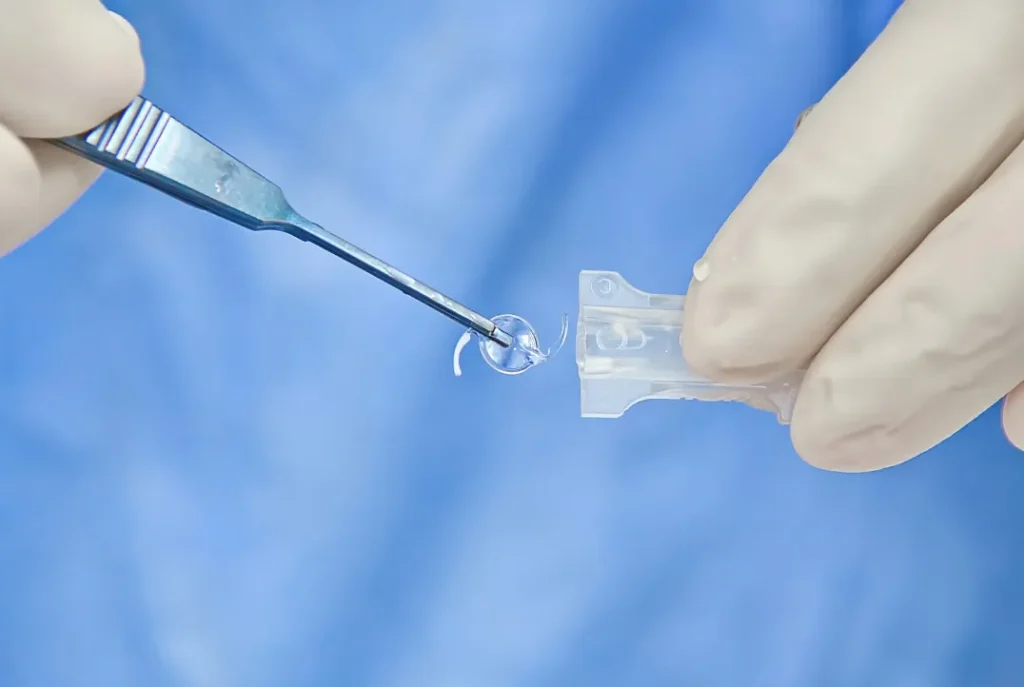
For those seeking a more permanent alternative to spectacles, replacing the aged natural lens with an implant is a popular choice. This procedure is often performed as part of a Refractive Lens Exchange (RLE) or during cataract surgery.
Multifocal Intraocular Lenses (IOLs)
Multifocal lenses are engineered with specialised zones that have different focusing powers. These zones allow light from various distances to reach the retina simultaneously.
- How they work: The lens features concentric rings or distinct sectors that split light into near, intermediate, and far focal points.
- The Brain’s Role: Your brain naturally learns to select the correct focus for the task at hand through a process known as neuroadaptation.
Patient Benefit: These lenses provide a high degree of spectacle independence. Most patients find they can perform most of their daily activities including driving, watching television, and checking their watches without reaching for a pair of glasses.
Extended Depth of Focus (EDOF) Lenses
EDOF lenses represent a different optical approach. Instead of creating several distinct focal points, they use advanced wavefront technology to stretch a single focal point into an elongated zone of clear vision.
- The Technology: This creates a continuous range of high-quality vision, particularly effective for the intermediate zone where our computer screens and car dashboards sit.
- Visual Quality: Because the light is not split into multiple points, EDOF lenses often result in fewer visual side effects like halos or glare around lights at night.
Patient Benefit: Patients who lead active lifestyles or spend significant time on computers often prefer EDOF lenses. They offer a smooth, natural transition between distance and intermediate ranges, providing excellent clarity for modern digital lives.
Choosing the right lens for your lifestyle
There is no one-size-fits-all lens in ophthalmology. Dr Roy Tan performs a comprehensive assessment of your ocular anatomy and daily habits to recommend the best fit.
Surgical Precision for Presbyopia: Bladeless Technology
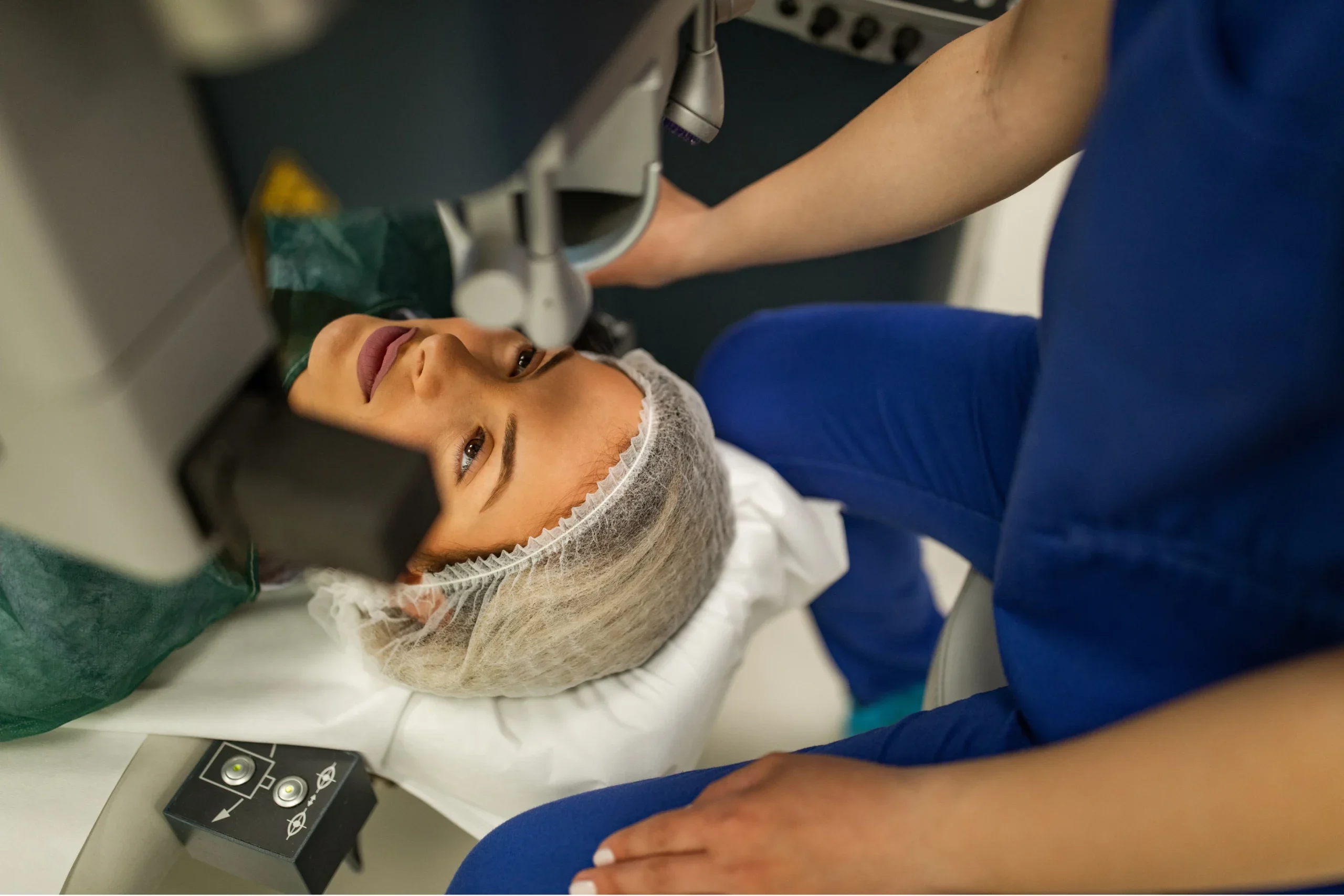
The success of a premium IOL depends heavily on the precision of the surgery itself. At Cornerstone Eye Centre, the use of laser technology has refined the process of lens replacement.
What is Bladeless Surgery for Presbyopia?
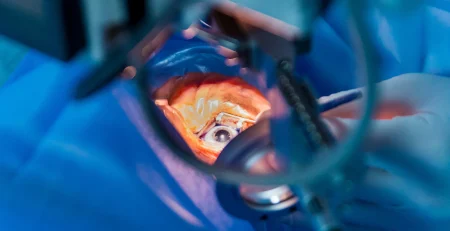
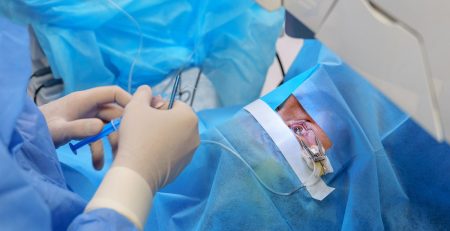
Traditional surgery involves manual incisions made with a handheld blade. Bladeless surgery (also known as Femtosecond Laser-Assisted Cataract Surgery or FLACS) replaces these manual steps with a computer-guided laser. This laser can create incisions with a level of accuracy that is difficult to achieve by hand, measured in microns.
Enhancing IOL outcomes with laser precision
For advanced lenses like Multifocal or EDOF IOLs to work at their full potential, they must be perfectly centred within the eye.
- The Capsulotomy: The laser creates a perfectly circular opening in the thin membrane (capsule) that holds the lens.
- Perfect Centration: A perfectly round and centred opening ensures the new lens sits exactly where it needs to be, which is vital for the complex optics of multifocal lenses to function correctly.
Benefits of a laser-assisted approach
A laser-assisted approach offers several advantages for the patient:
- Lower Energy Use: The laser pre-softens and fragments the old lens, meaning less ultrasound energy is required to remove it. This is gentler on the delicate structures of the eye.
- Predictable Recovery: Precise incisions are often self-sealing and more stable, contributing to a smoother healing process.
- Customisation: The system uses 3D imaging to map your eye’s unique anatomy, allowing the surgeon to tailor the procedure to your specific ocular fingerprint.
Frequently Asked Questions about Presbyopia
Is the treatment permanent for presbyopia?
Lens replacement is considered a long-term solution. Once the natural, flexible lens is replaced with a synthetic IOL, presbyopia will not return because the plastic or silicone lens does not age or harden like a biological one. Additionally, since the natural lens is removed, you will never develop cataracts in that eye.
How long is the presbyopia recovery for bladeless surgery?
Most patients notice an improvement in their vision within 24 hours, though it can take a few weeks for the vision to fully stabilise and for the brain to adapt to the new optics. Most daily activities can be resumed within a few days, though you will be advised to avoid heavy lifting or swimming for a short period.
Can I treat presbyopia if I also have astigmatism?
Yes. Many Multifocal and EDOF lenses come in Toric versions. These are specially shaped to correct the irregular curvature of the cornea (astigmatism) at the same time they treat your presbyopia, further reducing your reliance on glasses after surgery.
Why Choose Dr Roy Tan at Cornerstone Eye Centre
Choosing the right specialist for your vision is a personal journey. Dr Roy Tan at Cornerstone Eye Centre brings years of clinical expertise and a patient-centric approach to every consultation. Located at Novena and Mount Alvernia Medical Centre, the clinic is equipped with the latest diagnostic and surgical technology. Dr Tan focuses on understanding your specific lifestyle needs to help you navigate the many options available for presbyopia.
Summary of Key Symptoms
- Difficulty seeing small print or fine details up close.
- Holding reading materials further away to see clearly.
- Headaches or eye fatigue after performing near tasks.
- Blurred vision in low-light conditions.
If you are experiencing any of these symptoms and your quality of life is affected, the next crucial step is a comprehensive eye examination with an experienced ophthalmologist. Consult Dr Roy Tan at Cornerstone Eye Centre in Novena & Mount Alvernia to discuss your vision and treatment options.
Take the Next Step
Early detection and treatment are crucial to safeguarding your vision from the irreversible damage caused by glaucoma.
Book the Comprehensive $88 Cataract & Glaucoma Screening.
Book a Cataract & Glaucoma Screening for $88
Don’t wait for symptoms to appear before taking action. Early detection is key to preserving your vision.
At Dr Roy Tan’s clinic, we offer a comprehensive Cataract & Glaucoma Screening for just $88. This screening is designed to assess your eye health thoroughly, identify any early indicators of glaucoma or cataracts, and discuss your personalised options if either condition is detected.