Eyelid Cancer in Singapore: Symptoms, Types & Treatment with Dr Roy Tan
Key Takeaway (TL;DR):
This guide explains eyelid cancer for patients in Singapore. It covers how to recognise symptoms, such as a persistent lump or sore, and outlines the common types of eyelid cancer, such as basal cell carcinoma. We detail the diagnostic process and eyelid cancer treatment options in Singapore, including precise surgery and functional reconstruction. The key takeaway is that early specialist evaluation, such as by an oculoplastic surgeon, leads to effective management. If you notice a lasting change on your eyelid, please seek a professional consultation.
About Dr Roy Tan
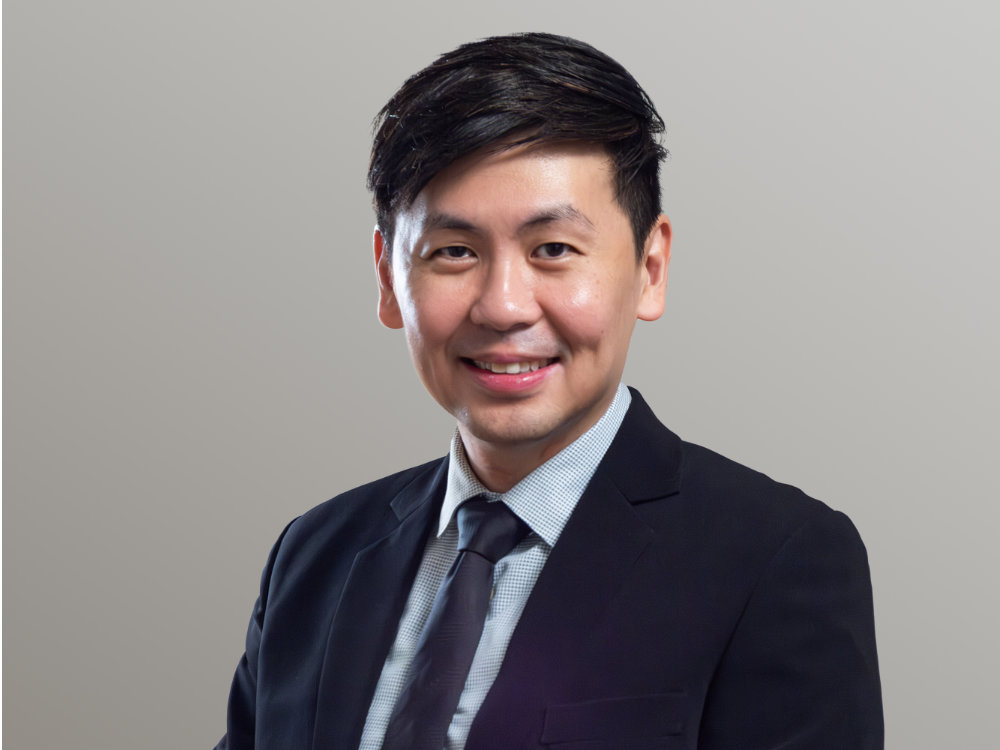
Dr Roy Tan is an expert Ophthalmologist and Oculoplastic Surgeon at Asian Healthcare Specialists. He is dedicated to providing compassionate, precise surgical care for complex eyelid conditions, ensuring the complete eradication of eyelid cancer while preserving vital eye function and aesthetics.
Discovering an unusual growth or sore on your eyelid can be deeply worrying. The very word ‘cancer’ is alarming. Please know that you are not alone in this concern, and taking the first step to understand your condition is the most important thing you can do. Here in Singapore, where our year-round sun exposure is constant, being vigilant about changes in our skin is crucial.
The good news is that with timely and appropriate care, the outlook for most eyelid cancer cases is very positive. This page is designed to be your compassionate guide. We’ll walk you through what eyelid cancer is, how to spot the early signs, and explain the personalised, specialist-led care available at Asian Healthcare Specialists (AHS), led by specialists like Dr Roy Tan. Our goal is to provide clarity, reduce anxiety, and help you move forward with confidence.
Understanding Eyelid Cancer: What You Need to Know
Think of your eyelid as a delicate but essential protective shield for your eye. It’s not just about appearance; it’s a functional marvel that blinks to spread tears, keeps the eye moist, and blocks out dust and light. Eyelid cancer occurs when cells in this sensitive area grow in an abnormal, uncontrolled way. While it is a serious condition that requires attention—primarily because it can threaten your vision and eye health if left unchecked—modern medical approaches are highly effective. The key is early detection and management by a specialist who understands the unique anatomy of the eye area.
Common Types of Eyelid Cancer
 Not all eyelid cancers behave the same way. Understanding the type is the first step in planning the right care. The main types include:
| Type | Description & Characteristics |
|---|---|
| Basal Cell Carcinoma (BCC) | This is by far the most common type of eyelid cancer. It often appears as a small, pearly, or waxy bump, sometimes with visible tiny blood vessels. It might look like a sore that bleeds a little, scabs over, but never truly heals. While BCC rarely spreads to other parts of the body, it can grow slowly and cause significant local damage to the eyelid structure. |
| Squamous Cell Carcinoma (SCC) | Less common but generally more aggressive than BCC, SCC may present as a scaly, red patch, a firm nodule, or a sore that crusts. It has a higher potential to spread if left untreated. |
| Sebaceous Gland Carcinoma | This is a rare but aggressive cancer that arises from the oil glands of the eyelid. It can be tricky because it may mimic a persistent chalazion (a blocked oil gland or stye). Any lump suspected to be a chalazion that recurs or fails to resolve with standard treatment should be carefully reviewed. |
| Eyelid Melanoma | This is the least common but most serious type, arising from pigment-producing cells. It requires urgent attention. Be mindful of any existing mole or new pigmented spot on the eyelid that changes in size, shape, colour, or elevation. |
Recognising the Signs: Symptoms of Eyelid Cancer
Your body often sends signals. When it comes to your eyelids, it’s vital to listen. Common eyelid cancer symptoms include:
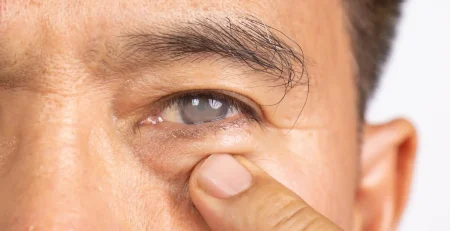
- A painless lump, thickening, or raised area on the eyelid.
- A sore that bleeds intermittently or simply will not heal, even after several weeks.
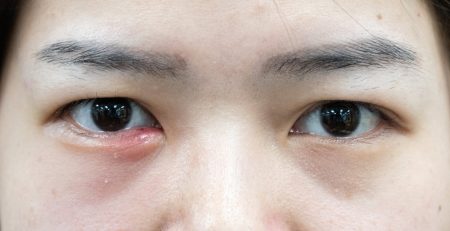
- Persistent redness, irritation, scaling, or crusting along the eyelid margin.
- Unexplained loss of eyelashes (madarosis) in a specific spot.
- A change in a pre-existing freckle or mole on the eyelid.
- A wart-like or ulcerated growth that seems to slowly enlarge.
A helpful rule of thumb: Any persistent change on your eyelid that lasts for more than two to three weeks deserves a professional evaluation. It’s always better to have a specialist like Dr Roy Tan assess a benign condition than to ignore a potentially serious one.
Causes and Risk Factors in Singapore’s Context
Why does this happen? The primary culprit for most eyelid cancer cases is cumulative exposure to ultraviolet (UV) radiation from the sun. This makes our context in Singapore particularly relevant. Our tropical climate means high UV levels year-round, not just on sunny beach days. Daily, incidental exposure adds up over a lifetime.
Other risk factors include fair skin that burns easily, a history of skin cancer, older age, and a weakened immune system. This understanding isn’t meant to cause fear, but to empower you. It underscores the importance of sun protection—using broad-spectrum sunscreen and wearing UV-blocking sunglasses—as a practical, preventative step for everyone.
Diagnosis and Treatment of Eyelid Cancer in Singapore
How is Eyelid Cancer Diagnosed?
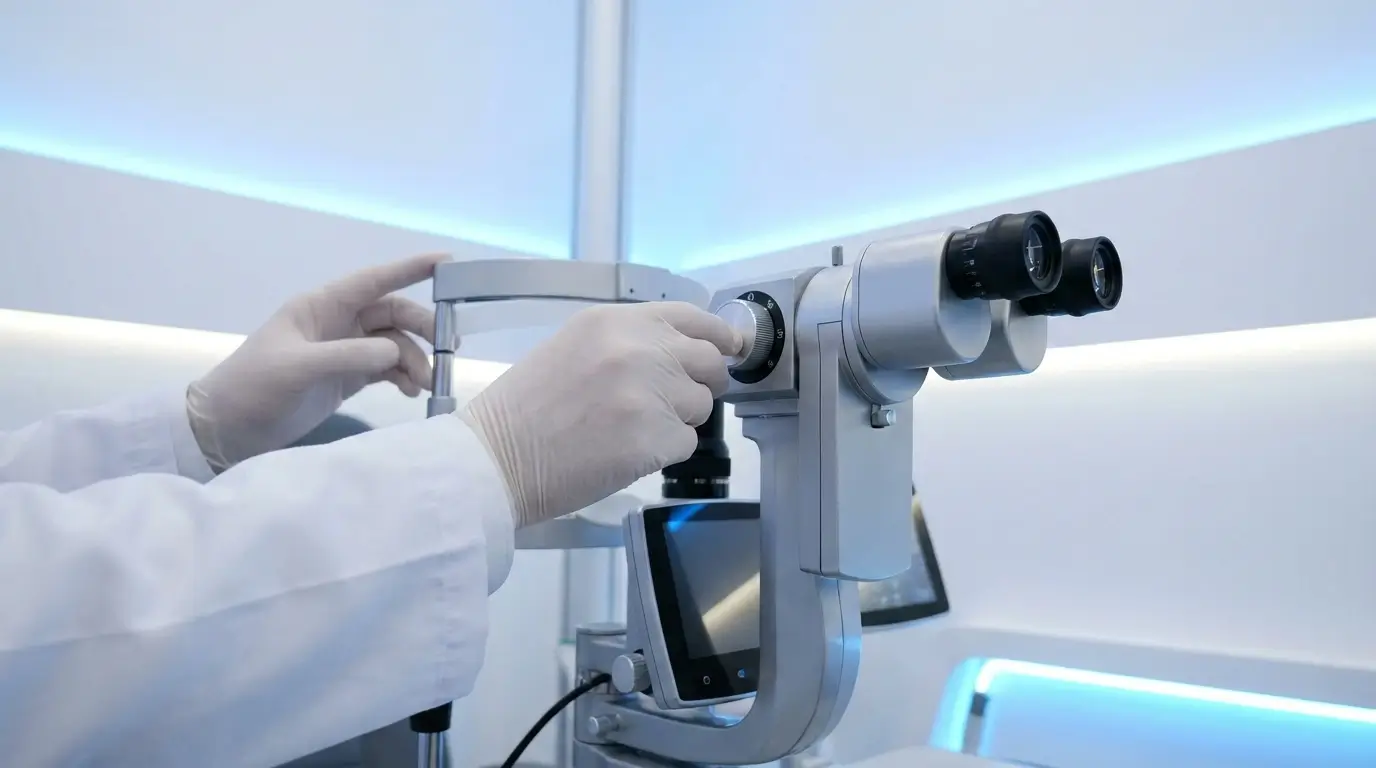
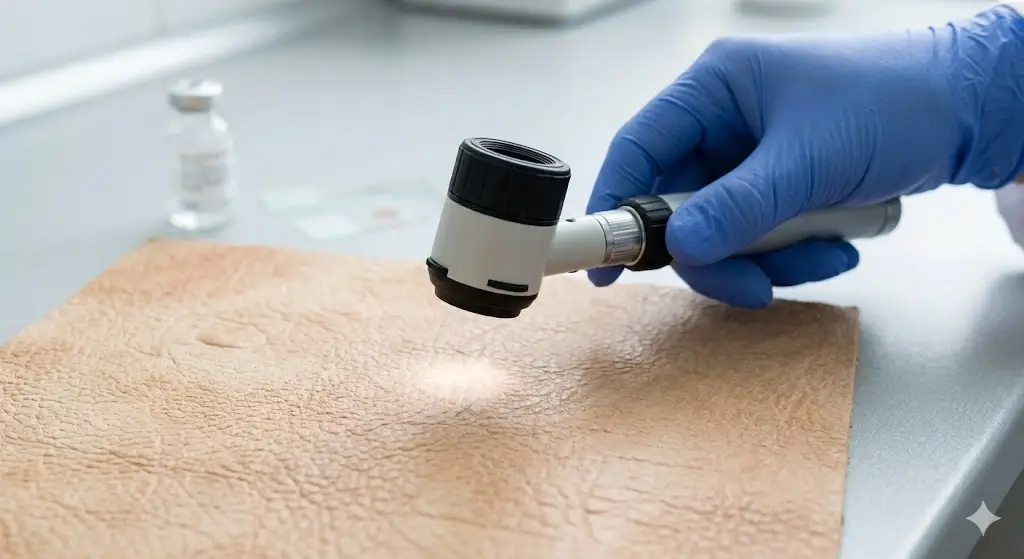
If you’ve noticed a change, the diagnostic journey is straightforward and designed to give you definitive answers. It typically begins with a comprehensive clinical examination by an ophthalmologist or an oculoplastic surgeon. Using magnification and specialised lighting, the specialist will assess the lesion’s characteristics.
To know for certain, a biopsy is usually recommended. This is a minor procedure where a small sample of tissue is taken, often under local anaesthesia, and sent to a laboratory for analysis. It’s a precise step that provides a clear diagnosis, confirming the type and nature of the cells, which then directly informs your treatment plan.
Personalised Treatment Pathways at AHS
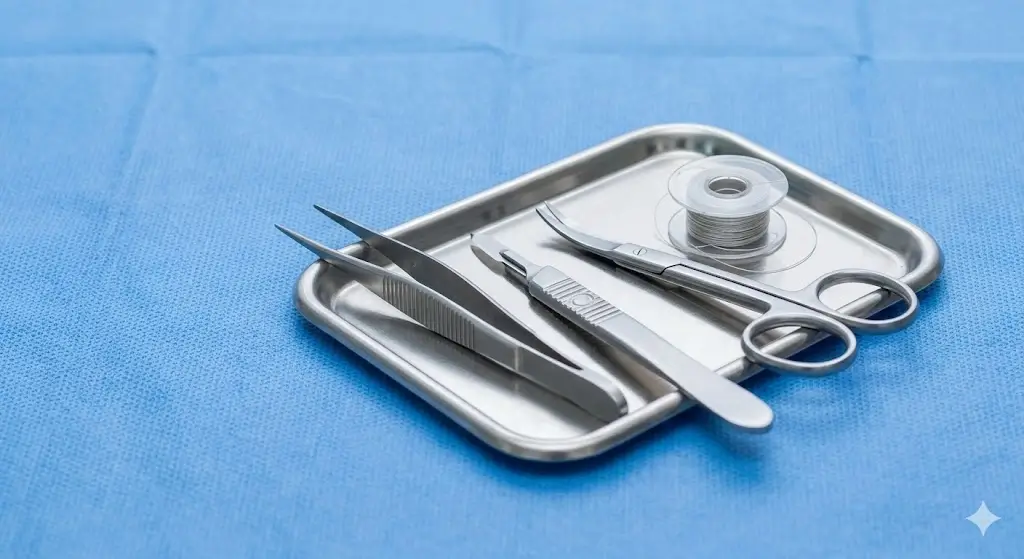 Treatment for eyelid cancer is not one-size-fits-all. At Asian Healthcare Specialists, we believe in creating a collaborative, personalised plan with you. The primary goal is always the complete removal of the cancer. However, given the eyelid’s critical role, the equally important goal is to preserve or restore its function and appearance.
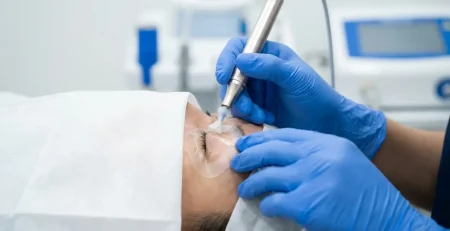
- Surgical Excision: This is the cornerstone of treatment for most eyelid cancers. The tumour is removed with a margin of healthy tissue to ensure complete clearance, and the removal is confirmed by laboratory analysis.
- Mohs Micrographic Surgery: For certain cancers, particularly those in cosmetically and functionally sensitive areas, this specialised technique may be recommended. It involves removing the cancer layer by layer and examining each layer under a microscope during the procedure. This allows for maximal preservation of healthy tissue while ensuring the cancer is fully removed.
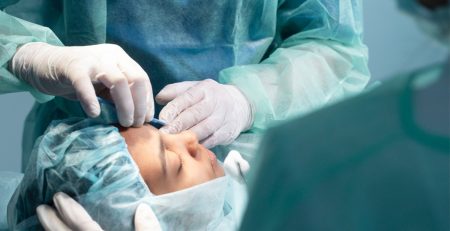
- Eyelid Reconstruction: Here, specialist expertise becomes paramount. Immediately after the tumour is removed, the focus shifts to rebuilding the eyelid. This isn’t merely cosmetic; it’s functional surgery to reconstruct an eyelid that can blink properly, protect the eye, and support tear drainage. An oculoplastic surgeon like Dr Roy Tan is specifically trained in these intricate reconstructive techniques.
- Other Therapies: Depending on the specific case, options such as topical medications, cryotherapy (freezing), or radiotherapy may be considered as part of the treatment plan.
The Importance of Specialist Care: Oculoplastic Surgery
You might wonder, “Can’t any surgeon remove this?” This is a key differentiator. While a general surgeon or dermatologist can remove a growth, an oculoplastic surgeon is an ophthalmologist who has undergone further, sub-specialist training in the delicate anatomy and surgery of the eyelids, eye socket, and tear ducts. Why does this matter for eyelid cancer treatment in Singapore?
Because the surgery is only half the challenge. The other half is expertly rebuilding the eyelid’s complex architecture. This dual focus—on complete cancer eradication and functional/aesthetic reconstruction—is what defines specialist eyelid cancer care. It helps ensure the best possible long-term outcome for both your health and your quality of life.
Why Choose Dr Roy Tan and Asian Healthcare Specialists for Eyelid Cancer Care?
Facing a diagnosis can feel overwhelming. At Asian Healthcare Specialists, we are here to guide you with a blend of medical expertise and genuine compassion.
- Focused Expertise: Dr Roy Tan brings dedicated training in ophthalmology and oculoplastic surgery to your care. This means your condition is managed by a specialist whose entire focus is on the health and function of the eye and its surrounding structures.
- A Holistic, Patient-Centred Approach: We take the time to listen, explain your diagnosis in clear terms, and discuss all treatment options with you. We believe in caring for you as a whole person, addressing your medical needs while understanding your concerns about appearance and daily life.
- Multidisciplinary Support Within One Group: As part of the AHS family, your care is supported by a network of specialists. Should you need related care—for example, a full skin check with one of our dermatologists—this can be coordinated seamlessly within our group, providing comprehensive oversight for your health.
- Commitment to Long-Term Wellbeing: Our care doesn’t end after surgery. We emphasise regular follow-up to monitor for any signs of recurrence and to ensure your eye and eyelid continue to function healthily, providing you with peace of mind for the future.
Frequently Asked Questions About Eyelid Cancer
1. Is eyelid cancer life-threatening?
Most common eyelid cancers, such as basal cell carcinoma, are slow-growing and rarely spread to other parts of the body. However, if left untreated, they can cause significant local damage to the eyelid and eye. Other types can be more aggressive, which is why early diagnosis and treatment are so important for an excellent prognosis.
2. Is eyelid cancer surgery painful?
The procedure itself is performed under local anaesthesia, so you should not feel pain. It is common to experience some mild discomfort, tightness, or swelling during the recovery period, which can be managed with simple pain relief as advised by your doctor.
3. Will I need plastic surgery after eyelid cancer removal?
Reconstruction is typically an integral part of the surgical plan, often performed in the same operation. An oculoplastic surgeon is trained to remove the cancer and then immediately reconstruct the eyelid. The aim is to restore both the protective function and a natural appearance as effectively as possible.
4. How long is the recovery after eyelid cancer surgery?
Initial healing, where the wound closes, and stitches are removed, usually takes 1 to 2 weeks. Swelling and bruising will gradually subside over the following weeks. The final aesthetic result will continue to refine and settle over several months. Your surgeon will provide you with specific aftercare instructions.
5. Can eyelid cancer come back?
There is a possibility of recurrence, which is why ongoing follow-up is a crucial part of your care plan. You will be advised on a schedule for check-ups. We will also guide you on sun protection and self-examination techniques to monitor your skin health.
Take the Next Step Towards Confidence and Care
Noticing a change on your eyelid is a sign to act, not to worry in silence. Early professional evaluation is the most powerful step you can take for your eye health and peace of mind.
Contact Asian Healthcare Specialists today to schedule a confidential consultation with Dr Roy Tan. Our team is here to provide you with an accurate diagnosis, clear explanations, and a personalised treatment plan focused on your complete well-being. Let us partner with you on this journey.