
Dry Eyes Treatment in Singapore: Guide to Causes and Relief
If you experience persistent gritty or tired sensations in your eyes, seeking dry eyes treatment in Singapore gives you access to a range of clinical options suited to your specific condition. Among the general eye services available, eye care professionals typically recommend preservative-free lubricating drops or ointments for mild discomfort. For underlying issues like clogged oil glands, clinics provide in-office therapies to address the root causes of dryness. A proper eye assessment helps determine the most appropriate, evidence-based management plan for lasting relief.
What is Dry Eye Syndrome in Singapore?
Dry eye syndrome is a multi-factorial disease of the ocular surface characterised by a loss of homeostasis of the tear film. It happens when your tears do not lubricate well, causing inflammation and possible damage to the eye’s surface.
Understanding Tear Film Instability and Tear Breakup Time (TBUT)
A healthy tear film is a three-layer structure consisting of oil (lipids) to prevent evaporation, water (aqueous) to cleanse the eye, and mucus to spread tears evenly.
To evaluate how well your tear film works, eye specialists measure your Tear Breakup Time (TBUT). This test measures how many seconds it takes for dry spots to appear on the surface of the eye after a person blinks. A short TBUT indicates that your protective tear film is unstable and evaporating too quickly, leaving delicate corneal nerves exposed to the air.
Two Main Types of Dry Eyes
- Evaporative Dry Eye: The most common form locally, usually stemming from issues with the eyelid’s oil-producing glands (Meibomian glands), causing tears to evaporate rapidly.
- Aqueous Deficiency: Occurs when the lacrimal glands do not produce enough watery fluid to maintain adequate moisture levels.
The Four Stages of Dry Eye Disease
Dry eye disease is a progressive condition. Clinicians in Singapore typically categorise the severity into four stages based on symptom frequency, visual impact, and clinical signs like corneal staining.

Stage 1: Mild and Episodic
At this early stage, symptoms are often triggered due to outside factors, like prolonged screen use or air-conditioned environments.
- Signs: Mild redness and occasional dryness.
- Management: Usually managed with lifestyle adjustments and over-the-counter lubricating eye drops.
Stage 2: Moderate and Frequent
Symptoms become more persistent and may begin to interfere with daily activities like reading or driving.
- Signs: Increased tear film instability and noticeable staining of the conjunctiva during a clinical exam.
- Management: May involve preservative-free lubricants or anti-inflammatory eye drops prescribed by a specialist.
Stage 3: Severe and Chronic
In Stage 3, the discomfort is significant and often constant, regardless of the environment.
- Signs: Marked corneal staining and filamentary keratitis (small mucoid threads on the cornea). People frequently experience blurred visual acuity.
- Management: Intensive therapy is required, which may include punctal plugs or oral supplements to improve tear quality.
Stage 4: Advanced and Sight-Threatening
Stage 4 represents the most severe manifestation of dry eyes. At this level, the ocular surface shows constant staining, indicating significant cellular damage and a high risk of permanent complications.
- Signs: Constant pain, severe redness, and a marked decrease in vision. There is a heightened risk of corneal scarring or secondary infections.
- Management: Management requires specialist intervention, such as autologous serum drops, moisture chamber goggles, or specialised scleral lenses to protect the cornea.
Common Dry Eyes Symptoms
The symptoms of dry eyes are varied and can sometimes be misleading. Recognising the full range of signs, including some counterintuitive ones, helps patients seek help at the right time.
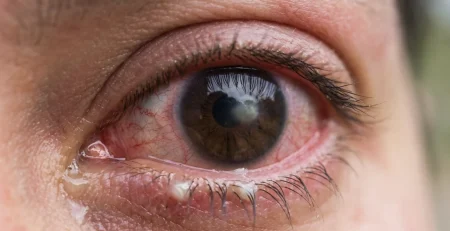
- Redness & Gritty Sensations: Feeling like sand is in your eye.
- Burning or Stinging: Often worse in air-conditioned offices or malls.
- Paradoxical Tearing: Your eyes may water excessively. This is a reflex response to irritation, but these tears lack the oil needed to stay on the eye surface.
- Fluctuating Vision: Blurriness that improves temporarily after blinking.
Root Causes of Dry Eyes
Various lifestyle and environmental factors contribute to the high prevalence of dry eye in Singapore. Identifying these triggers is the first step toward effective long-term management.

Digital Eye Strain
Singapore’s high screen usage is a primary driver of dry eye. When we stare at computers or smartphones, our blink rate drops by nearly sixty percent. Blinking is essential to pumps oil from the glands onto the eye surface.
Meibomian Gland Dysfunction (MGD)
MGD is the leading cause of dry eyes. When these glands are blocked, the oil becomes thick (like toothpaste) instead of clear. If left untreated, these glands can wither away (atrophy). Early intervention is important because lost glands cannot be regrown.
Environmental Factors in Singapore
The local environment plays a substantial role in tear evaporation.
- Air-Conditioning: Constant exposure to AC at home and in the office strips moisture from the air and the eyes.
- Urban Pollutants: Dust and smoke in a city environment can irritate the ocular surface.
- Contact Lens Wear: Long hours of lens wear can disrupt the tear film and decrease corneal sensitivity.
- Low Humidity Indoors: Dehumidified environments accelerate the breakdown of the lipid layer.
Dry Eye Treatment Options in Singapore
We employ a data-driven approach to identify the specific subtype of dry eye, ensuring treatment targets the root cause rather than just the symptoms.
Supportive and Home Therapies
- Thermal Eye Masks: For home care, eye care professionals frequently recommend the use of dedicated thermal eye masks. Applying controlled, warm compression to the eyelids helps liquefy hardened oils trapped inside the meibomian glands, improving natural oil flow before daily lid hygiene routines.
- Preservative-Free Lubricants: Essential for safe, frequent daily hydration without irritating the ocular surface.
Advanced Clinical Diagnostics and Eye Drops
Diagnosis begins with a non-invasive assessment of the tear film quality and gland structure. For advanced cases (such as Stage 4 or severe ocular surface disease), eye specialists may discuss biological drop therapies, such as Plasma Eye Drops / PRP (Platelet-Rich Plasma) Eye Drops and autologous serum drops. These are custom-formulated from a patient’s own blood components to provide essential growth factors and vitamins that mimic natural tears and accelerate corneal healing.
Procedural Treatments
For patients with meibomian gland dysfunction (MGD) or structural tear film issues, targeted clinical options include:
- Intense Pulsed Light (IPL): This therapy uses specific wavelengths of light to reduce inflammation around the eyelids and improve gland function.
- Thermal Pulsation: A system that applies controlled heat and gentle pressure to the eyelids. This liquefies the hardened oils and clears the obstructions, allowing the glands to resume natural oil production.
- Meibomian Gland Expression: A clinical procedure where the specialist manually clears the glands after they have been softened with heat.
- Punctal Plugs: Tiny biocompatible devices that block tear drainage, keeping your natural moisture on the eye for longer.
Frequently Asked Questions About Dry Eye Management
What Happens If Dry Eyes Are Left Untreated?
Ignoring chronic symptoms can lead to complications beyond simple discomfort. Over time, severe untreated dry eyes can result in ongoing inflammation, corneal ulcers, secondary eye infections, and permanent corneal scarring that may impair your long-term visual acuity.
Can Dry Eyes be Permanently Cured or Reversed?
Dry eye is often a chronic condition. While a permanent cure is rare, symptoms can be effectively managed so that patients can return to daily activities without constant discomfort.
What Vitamins and Foods Help With Dry Eyes?
Nutrition supports the quality of your tear film from the inside out.
- Omega-3 Fatty Acids: Found in salmon, walnuts, and flaxseed, these help reduce systemic inflammation and improve the quality of the oil produced by your meibomian glands.
- Vitamin A: Essential for the health of the conjunctiva and cornea.
- Hydration: Drinking plenty of water is fundamental for the aqueous layer of your tears. While these supplements are beneficial, they are intended to support rather than replace professional medical treatments.
How Can I Safely Lubricate My Dry Eyes at Home?
When selecting artificial tears, always opt for preservative-free formulas, especially if you apply them more than four times a day. Preservatives found in bottled drops can actually irritate the eye surface over time.
Why Choose Dr Roy Tan For Dry Eye Treatment
Dr Roy Tan is a fellowship-trained Oculoplastic and Orbital Surgeon. He holds several professional qualifications, including an MBBS (Singapore), MMed (Ophthalmology), FRCOphth (UK), and FAMS. Alongside his clinical practice, he is a Fellow of The Royal College of Ophthalmologists (UK) and shares his experience with medical students as a clinical lecturer at both NUS and the LKC School of Medicine.
Booking a consultation with Dr Roy Tan at Cornerstone Eye Centre gives you access to a specialist who focuses on the complex structural anatomy of the eyelids. Because underlying issues like Meibomian Gland Dysfunction (MGD) and chronic blepharitis originate directly within the eyelid margins, his architectural understanding of the eye surface allows him to accurately diagnose your condition.
Cornerstone Eye Centre operates from two conveniently located clinics in Singapore:
- Novena: 101 Irrawaddy Road, #13-08 Royal Square Medical Centre, Singapore 329565
- Mount Alvernia: 820 Thomson Road, #06-05 Mount Alvernia Medical Centre A, Singapore
If you are struggling with persistent eye dryness, scratchiness, or fatigue, book an appointment now.
Take the Next Step
Early detection and treatment are crucial to safeguarding your vision from the irreversible damage.
Book the Comprehensive $88 Cataract & Glaucoma Screening.
Book a Cataract & Glaucoma Screening for $88
Don’t wait for symptoms to appear before taking action. Early detection is key to preserving your vision.
At Dr Roy Tan’s clinic, we offer a comprehensive Cataract & Glaucoma Screening for just $88. This screening is designed to assess your eye health thoroughly, identify any early indicators of glaucoma or cataracts, and discuss your personalised options if either condition is detected.