
Preparing for Your First Consultation with Ophthalmologist in Singapore
Executive Summary
Navigating your initial eye clinic visit in Singapore can feel daunting, but clear preparation ensures a smooth and reassuring experience. Preparing for your first consultation with an ophthalmologist in Singapore involves gathering relevant ocular and medical records, listing current medications, and planning safe transportation home in case pupil-dilating drops are administered. Knowing what diagnostic assessments to expect allows you to communicate your visual concerns effectively. This detailed guide covers key steps, essential documents, common clinical tests, transport considerations, and targeted questions to discuss during your appointment at established medical hubs like Novena or Alvernia.

Dr Roy Tan
Eye Specialist & Ophthalmologist | Asian Healthcare Specialists
Providing comprehensive diagnostic evaluations, advanced medical eye care, and personalised treatments for a wide spectrum of ocular conditions.
Introduction
Stepping into a specialised eye clinic for the first time is a significant step toward preserving long-term visual clarity and ocular wellness. Preparing for your first consultation with an ophthalmologist in Singapore helps you get the most out of your visit, whether you require an evaluation for blurry vision, dry eyes, eyelid conditions, or routine screening. Eye care specialists in Singapore operate under structured clinical guidelines established by the Ministry of Health (MOH), ensuring thorough, evidence-based evaluations.
Many individuals experience mild anxiety before an eye examination because they are unsure what diagnostic equipment or drop treatments will be used. Knowing how to organise your health records, understanding the temporary effects of diagnostic eye drops, and anticipating clinical assessments transform an unfamiliar appointment into a collaborative healthcare decision.
Why Seeing an Eye Specialist Matters for Vision Health
General health check-ups often include basic vision tests, but an eye specialist provides targeted diagnostic evaluations for complex ocular structures. Ophthalmologists are medical doctors specialised in diagnosing, managing, and treating conditions affecting the cornea, lens, retina, optic nerve, eyelids, and eye socket.
Regular consultations allow specialists to detect asymptomatic eye conditions before noticeable visual changes occur. For instance, conditions like glaucoma or early retinal tears often develop without immediate pain or vision loss. Prompt clinical evaluation ensures early intervention, preserving functional vision and helping patients maintain their daily routines across Singapore’s active urban environment.
Essential Documents and Medical History to Bring
Proper preparation begins before you leave your home or office. Bringing structured medical information helps your specialist form an accurate assessment of your ocular health.
- Current Eyewear: Bring all prescription spectacles, reading glasses, or contact lens boxes (including prescription details and lens types).
- Medical History Summary: Note past ocular surgeries, trauma, laser treatments, or systemic health conditions such as diabetes, hypertension, or autoimmune disorders.
- Medication List: Prepare a complete list of prescription eye drops, oral medications, and over-the-counter supplements.
- Identification and Referral Forms: Bring your NRIC or passport, insurance cards, and any referral letters from your general practitioner or optometrist.
Organising these items beforehand streamlines your registration process at Singapore medical centres, leaving more time for direct clinical discussion with your specialist.
Understanding Eye Dilating Drops and What to Expect
During your consultation, your specialist may administer dilating eye drops to widen your pupils. This allows a clear view of the back of your eye, including the retina, macula, and optic nerve head.
Dilating drops take approximately 20 to 30 minutes to take full effect. Once dilated, your eyes become temporarily sensitive to bright light, and your near vision will appear blurry for 4 to 6 hours. Because driving or operating machinery is unsafe while your vision is blurred, you should arrange public transport, taxi rides, or assistance from a family member. Bringing a comfortable pair of sunglasses is also recommended to reduce glare when leaving the clinic.
Diagnostic Tests Performed During an Ophthalmologist Visit
Eye consultations involve non-invasive diagnostic assessments designed to measure visual acuity and structural health. Each test provides specific data that guides individualised patient care plans.
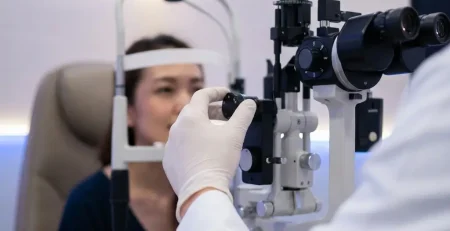
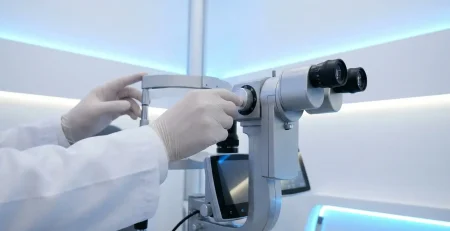
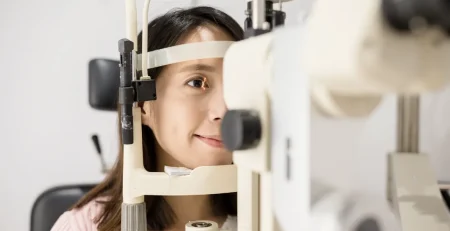
Specialists start with visual acuity testing using standardised charts to measure sharpness at distance and near ranges. Tonometry is then performed to measure intraocular pressure, a critical indicator for glaucoma screening. Slit-lamp biomicroscopy provides a magnified 3D view of the anterior segment of the eye, including the cornea, iris, and crystalline lens. Depending on individual clinical needs, optical coherence tomography (OCT) imaging may be performed to capture detailed cross-sectional images of the retinal layers.
Pathway Comparison: Routine Screening vs Focused Evaluation
Understanding how visual care pathways differ helps set realistic expectations for your appointment duration and clinical scope.
| Clinical Aspect | General Eye Screening Pathway | Focused Specialised Pathway |
|---|---|---|
| Primary Goal | Broad assessment of visual acuity and overall eye health | In-depth evaluation of specific symptoms or diagnosed conditions |
| Typical Duration | 45 to 60 minutes | 60 to 90 minutes (may include specialised imaging) |
| Common Tests | Visual acuity, tonometry, and slit-lamp examination | OCT imaging, corneal topography, dilated fundus exam, tear film analysis or visual field test |
| Patient Profile | Asymptomatic individuals seeking routine health maintenance | Patients with sudden blurred vision, eyelid issues, dry eye, or glaucoma concerns |
| Follow-up Frequency | Annually or biennially based on age and risk factors | Personalised schedule tailored to treatment response and monitoring |
Choosing the appropriate pathway ensures your consultation addresses your exact visual health goals efficiently.
Questions You Should Ask Your Specialist
An eye consultation is a two-way dialogue between you and your healthcare team. Preparing explicit questions beforehand helps you leave the clinic with full confidence in your care plan.
Consider asking your doctor about the underlying cause of your symptoms, whether lifestyle adjustments to your screen habits at work could help, and which warning signs require immediate emergency care. If treatments or procedures are advised, ask about expected recovery times and how they fit into your work or daily routine. Clear communication ensures that you feel supported and informed at every step of your visual health journey.
Conclusion
Preparing for your first consultation with an ophthalmologist in Singapore ensures a productive, stress-free clinical experience. By organising your medical history, bringing your current eyewear, planning safe transport home after pupil dilation, and writing down important questions, you play an active role in protecting your vision. Prioritising ocular health through timely specialist reviews supports long-term visual comfort and quality of life.
If you are experiencing vision changes, eye discomfort, or require a general eye evaluation, professional guidance is readily available. Learn more about our eye care services or schedule your appointment today.
Frequently Asked Questions
How long does a first ophthalmology consultation take in Singapore?
A first consultation usually takes between 45 and 90 minutes. This timeframe accounts for initial registration, basic visual acuity tests, intraocular pressure checks, pupil dilation wait times, and direct evaluation with your ophthalmologist. If detailed optical coherence tomography imaging or specialised dry eye assessments are required, the visit may take slightly longer.
Can I drive home after my eye consultation?
If your consultation involves pupil-dilating eye drops, you should not drive yourself home. Dilating drops cause temporary light sensitivity and blurred near vision lasting between 4 and 6 hours. It is safest to arrange for a family member to accompany you, or use public transport or ride-hailing services after your appointment.
What should I do if I wear contact lenses?
If you wear contact lenses, bring your lens case, prescription details, and a pair of prescription glasses to your appointment. For certain corneal scans or assessments, your specialist may recommend removing soft lenses or rigid gas-permeable lenses for a specified period prior to your consultation to ensure accurate corneal measurements.
Are eye consultation fees claimable under insurance or MediSave in Singapore?
Coverage depends on your specific private health insurance policy, corporate medical benefits, or the nature of the eye condition. In Singapore, consultations and procedures for diagnostic or therapeutic reasons (such as glaucoma management or surgical interventions) may be claimable under certain insurance policies or MediSave guidelines established by the Ministry of Health (MOH). Routine cosmetic evaluations are generally not covered.
What is the difference between an optometrist and an ophthalmologist?
An optometrist is a healthcare professional trained to conduct vision tests, prescribe corrective lenses, and detect common eye conditions. An ophthalmologist is a medical doctor who has completed specialised medical and surgical training. Ophthalmologists diagnose and treat complex eye diseases, prescribe medical treatments, and perform eye surgeries.