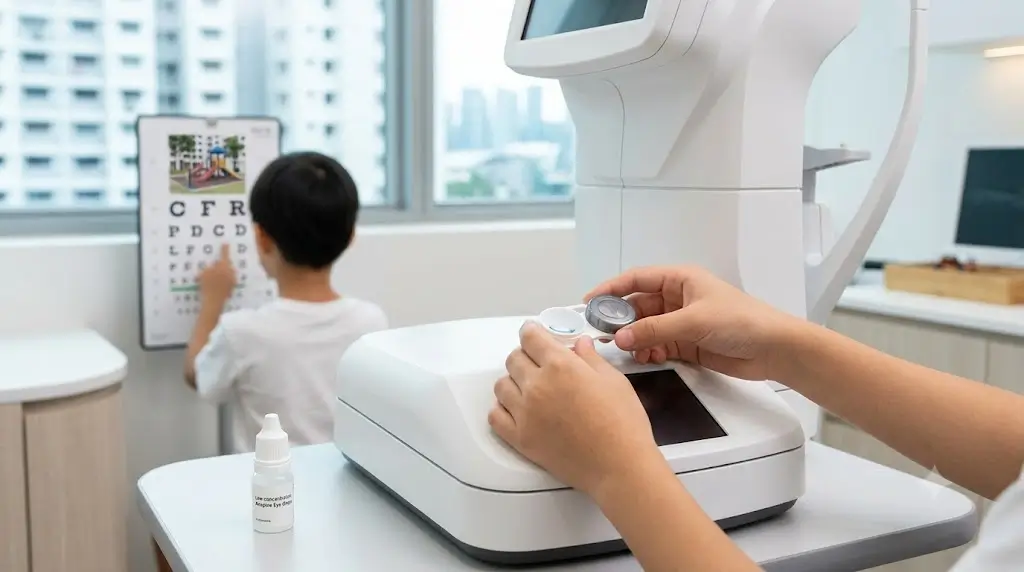
Myopia Control for Children in Singapore: Beyond Just Prescribing Stronger Glasses
Key Takeaway (TL;DR):
This guide explains why simply updating your child’s glasses prescription is no longer the standard of care for managing childhood myopia. We detail the proven treatments available in Singapore—such as low-dose Atropine eye drops, Ortho-K lenses, and specialised spectacle lenses—that can slow the progression of short-sightedness. The key takeaway is that early intervention can protect your child’s long-term eye health by reducing future risks. If you’re concerned about your child’s rapidly increasing myopia, the next step is to schedule a comprehensive assessment with a paediatric eye specialist like Dr Roy Tan.

About Dr Roy Tan
Dr Roy Tan is a Consultant Ophthalmologist at Asian Healthcare Specialists (Cornerstone Eye Centre). He provides compassionate, evidence-based care for paediatric patients, specializing in advanced myopia control strategies to safeguard children’s long-term visual development and health.
Introduction
Watching your child’s eyesight deteriorate year after year, with each visit to the optician resulting in a stronger glasses prescription, can be a source of deep worry for any parent. You might wonder, “Is this inevitable?” or “What does this mean for their future?” In Singapore, where myopia rates among children are among the highest in the world, these concerns are both common and valid.
The good news is that modern eye care has moved far beyond a passive approach. Today, managing childhood myopia is not just about providing clearer vision for today—it’s about actively protecting your child’s eye health for decades to come. At Cornerstone Eye Centre, part of the Asian Healthcare Specialists (AHS) group, Dr Roy Tan specialises in a proactive, evidence-based approach to myopia control.
This approach recognises myopia not merely as a refractive error but as a condition of excessive eye growth, which carries significant long-term risks. The goal is clear: to slow down this progression, stabilise your child’s prescription, and safeguard their visual future.
Ready to take a proactive step? Schedule a Paediatric Eye Assessment with Dr Roy Tan today.
Understanding Childhood Myopia: Why Early Intervention Matters
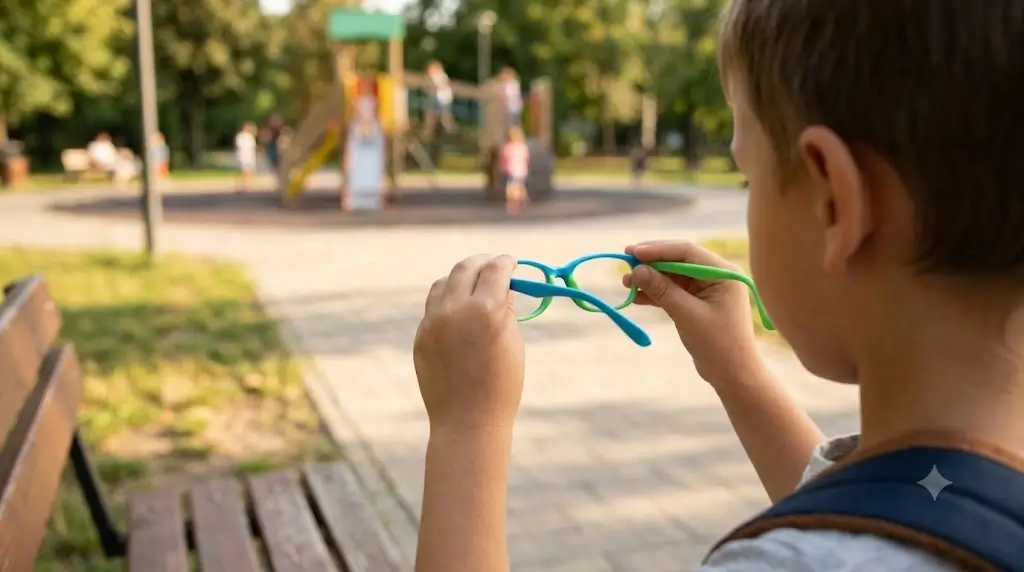
Myopia, or short-sightedness, occurs when the eye grows too long from front to back. This axial elongation causes light to focus in front of the retina instead of on it, resulting in blurred distance vision. In children, whose eyes are still developing, this growth can progress rapidly, especially in our urban environment, which emphasises near work and limits outdoor time.
The Hidden Risks of High Myopia
Many parents view myopia as a simple inconvenience that can be corrected with glasses. However, the true concern lies in the structural changes within the eye. High myopia significantly increases the lifetime risk of serious eye conditions, including:
| Condition | The Risk Factor |
|---|---|
| Retinal Detachment | The stretched, thinner retina is more vulnerable to tears. |
| Myopic Macular Degeneration | Central vision can be damaged due to eye elongation. |
| Glaucoma and Cataracts | The risk of developing these conditions earlier in life is significantly elevated. |
Think of the eye like a balloon. A little air (mild myopia) is fine, but over-inflating it (high myopia) stretches the material thin, making it much more susceptible to damage. Myopia control aims to prevent this over-inflation.
Why the Wait-and-See Approach is No Longer Recommended
The old paradigm of “just get stronger glasses each year” fails to address the underlying problem: the eye’s excessive growth. It corrects the symptom (blurred vision) but does not treat the condition. By intervening early with proven myopia control methods, we can often slow this growth by 50-60%, which can mean the difference between a stable, low prescription and one that progresses into the high-risk category.
Proven Myopia Control Treatments at Cornerstone Eye Centre
Dr Roy Tan offers a range of clinically validated treatments. The choice depends on your child’s age, prescription, lifestyle, and specific eye measurements, and is always made through a collaborative discussion with you.
- Low-Dose Atropine Eye Drops: This is a simple, once-a-day treatment. Extensive research, including major studies in Singapore, has shown that a very low concentration (typically 0.01%) of Atropine can effectively slow eye growth with minimal side effects. It’s a well-tolerated option that works for many children, offering a non-invasive way to manage progression.
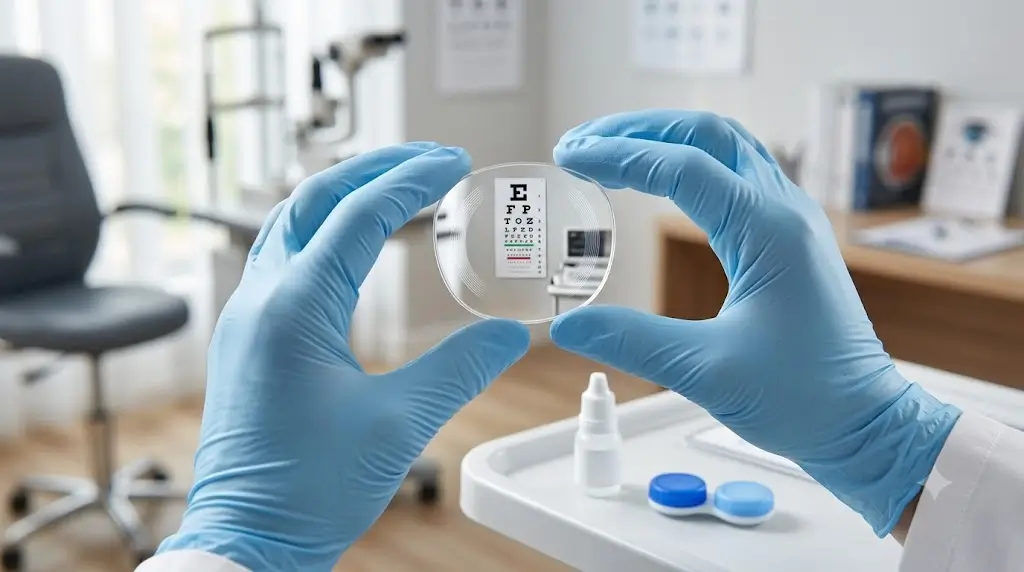
- Orthokeratology (Ortho-K) Lenses: These are specially designed, rigid gas-permeable lenses worn only during sleep. They gently reshape the front surface of the eye overnight, providing clear, glasses-free vision throughout the following day. Beyond convenience, Ortho-K creates peripheral retinal defocus, which has been shown to slow axial elongation. It is an excellent option for active children and those interested in reducing daytime dependence on glasses or contact lenses.
- Defocus Myopia Control Spectacles (DIMS Technology): If your child is too young or hesitant about contact lenses, specialised myopia control glasses are a fantastic, non-invasive option. Using advanced DIMS technology (Defocus Incorporated Multiple Segments) or peripheral defocus lenses, these glasses look completely normal. However, they feature hundreds of microscopic “lenslets” that create a dual-focus effect. This provides clear central vision while blurring peripheral vision just enough to tell the brain to halt the eye’s growth.
- Dual-Focus Soft Contact Lenses: For older or highly active children who prefer daytime contact lenses, daily-disposable dual-focus soft lenses offer a comfortable, hygienic alternative. Like defocus spectacles, they use special optical zones to correct vision while simultaneously controlling myopia progression.
The Holistic Approach: Creating a Personalised Myopia Management Plan
At Cornerstone Eye Centre, we believe effective care combines clinical treatment with daily habits. Dr Roy Tan develops a personalised plan that considers the whole child.
Comprehensive Eye Assessments
Your child’s journey begins with a detailed examination. Beyond checking the prescription, Dr Roy measures axial length—a key indicator of eye growth. This precise measurement allows us to track progression accurately every 6-12 months and adjust the management plan as needed.
Customising the Treatment
There is no one-size-fits-all solution. Dr Roy will explain the pros and cons of each option. For some children with more aggressive progression, a combination of therapies—such as low-dose Atropine alongside myopia-control spectacles—may be recommended to achieve the best possible outcome.
Essential Eye Care Habits for Home
Treatment works best alongside positive lifestyle adjustments. We provide realistic, actionable advice for Singaporean families:
- Prioritise Outdoor Time: Aim for 1-2 hours of outdoor activity daily. Natural light is crucial for healthy eye development.
- Practice Smart Screen Use: Encourage the 20-20-20 rule—every 20 minutes, look at something 20 feet away for 20 seconds.
- Ensure Good Lighting and Posture: Important for reading and close work.
Why Trust Dr Roy Tan with Your Child’s Eye Health?
As a dedicated ophthalmologist within the multidisciplinary Asian Healthcare Specialists network, Dr Roy Tan brings a compassionate and thorough approach to paediatric eye care. He understands the anxieties parents face and believes in clear communication and collaborative decision-making. His focus is on providing your child with gentle, expert care that aligns with the AHS values of integrity and patient-centred well-being. You are not just getting a prescription; you are gaining a partner in your child’s long-term visual health.
Take the first step towards protecting your child’s vision. Book a consultation with Dr Roy Tan to discuss a personalised myopia control strategy.
Frequently Asked Questions About Myopia Control
1. At what age should myopia control start?
Intervention is most effective when initiated early, typically between ages 6 and 16, when myopia progression is usually fastest. An assessment can be beneficial as soon as a child is diagnosed with progressive myopia.
2. Is it too late to start if my child already has high myopia?
It is never too late to begin a management plan. While we cannot reverse existing myopia, treatments can still help slow or halt further progression, which is vital for protecting against future risks associated with very high prescriptions.
3. Are Atropine eye drops safe for long-term use in children?
The low-dose (0.01%) formulation for myopia control has an excellent safety profile, supported by years of clinical studies. Any mild side effects, such as slight light sensitivity, are usually manageable and are outweighed by the benefits of slowing progression. Dr Roy will closely monitor your child.
4. How do I choose between Ortho-K, Atropine, and special lenses?
This is a decision made collaboratively after a comprehensive eye assessment. Dr Roy will consider your child’s age, prescription strength, daily activities, personal maturity (for handling lenses), and corneal health to recommend the most suitable option or combination.
5. Can dietary supplements or eye exercises cure myopia?
While a healthy diet supports overall eye health, there is no robust scientific evidence that supplements or eye exercises can reverse or reliably slow the axial elongation that causes myopia. Effective management relies on the evidence-based treatments described above, combined with healthy visual habits.
Protect Your Child’s Vision Today
Early, personalised intervention really works – and the earlier you start, the better your child’s long-term vision. What should you do next?
Book a consultation with Dr Roy Tan at Cornerstone Eye Centre in Singapore today to get a custom plan that protects your child’s eyes for life.