
Proptosis vs Exophthalmos, Is There Really a Difference?
Published on: 22 September 2026
Noticing that one or both eyes appear more prominent than before can be unsettling, especially when the change seems gradual and the reason is not obvious. Patients often arrive having searched both proptosis and exophthalmos online, unsure whether these describe different conditions. The terminology is the easy part. What matters clinically is identifying why the eye is protruding, because the causes range from thyroid eye disease to orbital tumours, infection, trauma and even normal eye anatomy that only looks like bulging.
Key Takeaways
- Proptosis and exophthalmos describe the same clinical finding, forward protrusion of the eyeball, and the terms are used interchangeably by eye specialists.
- Thyroid eye disease is the most common cause of bulging eyes in adults, but orbital tumours, orbital infection, trauma and even high myopia can produce a similar appearance.
- Sudden bulging with pain, fever or reduced vision is a same-day concern, while gradual bulging over months usually points to a slower-growing cause that still needs assessment.
- Diagnosis combines clinical exophthalmometry with CT or MRI imaging to identify the underlying cause and guide treatment.
- Treatment is directed at the cause, ranging from medical management of thyroid eye disease to targeted orbital surgery for structural problems.
What Do “Proptosis” and “Exophthalmos” Mean?
Both terms describe the same clinical sign, an eyeball sitting further forward than normal. Here is how eye specialists define and measure it.
Are Proptosis and Exophthalmos the Same Condition?
Yes. Proptosis and exophthalmos are clinically interchangeable terms for the forward displacement of the eyeball out of the bony eye socket. Some clinicians use exophthalmos specifically for thyroid-related bulging and proptosis as the broader term for any cause, but in day-to-day clinical practice, the two words are used synonymously.
How Doctors Measure Eye Protrusion (Exophthalmometry)
Eye specialists quantify how far the eye protrudes using a handheld instrument called an exophthalmometer, in a process known as exophthalmometry. The measurement runs from the corneal surface to the bony rim of the eye socket. A mean reading of around 16mm is generally considered within the normal range, with expected variation between individuals, sexes and ethnic groups. Serial measurements over time are often more useful than a single reading, since they show whether protrusion is stable, worsening or improving with treatment.
What Causes Bulging Eyes Beyond Thyroid Eye Disease?
While thyroid eye disease accounts for most cases in adults, it is not the sole cause. The conditions listed below are other potential factors evaluated during a clinical assessment.
Orbital Tumours and Growths Behind the Eye
A tumour or growth behind the eye can push it forward gradually, mimicking the appearance of thyroid-related bulging. Cavernous haemangiomas are the most common benign orbital tumour in adults and typically cause slow, painless protrusion over months to years, while nerve sheath tumours and, less commonly, malignant lesions can present in a similar way. These growths sit deep within the orbit, so they are usually invisible on the surface and are only found through clinical examination combined with orbital imaging.
Orbital Infection (Orbital Cellulitis) and Sudden Swelling
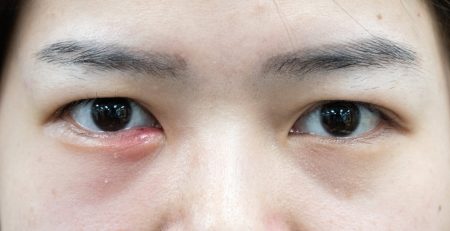
Orbital cellulitis is a bacterial infection of the tissue behind the eye, most often spreading from a sinus infection, and it behaves very differently from the slower-growing causes above. It develops rapidly, typically over a day or two, with pain on eye movement, eyelid swelling and redness, restricted eye movement and fever. Because untreated orbital cellulitis can threaten vision and, in severe cases, spread towards the brain, it is treated as an ophthalmic emergency requiring same-day assessment and intravenous antibiotics, unlike preseptal cellulitis, which is confined to the eyelid and generally less urgent.
Pseudo-Proptosis, When High Myopia or Facial Asymmetry Mimics Bulging Eyes
Not every prominent-looking eye has true proptosis. High myopia can lengthen the eyeball itself, making it appear to protrude more than the other eye even when orbital measurements are normal, a finding known as pseudo-proptosis. Facial asymmetry, a naturally shallow eye socket, or a larger eyelid opening on one side can create a similar visual impression. Telling true proptosis apart from pseudo-proptosis is one reason a clinical assessment matters more than self-diagnosis from a mirror or photograph.
Is Bulging Eyes Always a Sign of Thyroid Eye Disease?
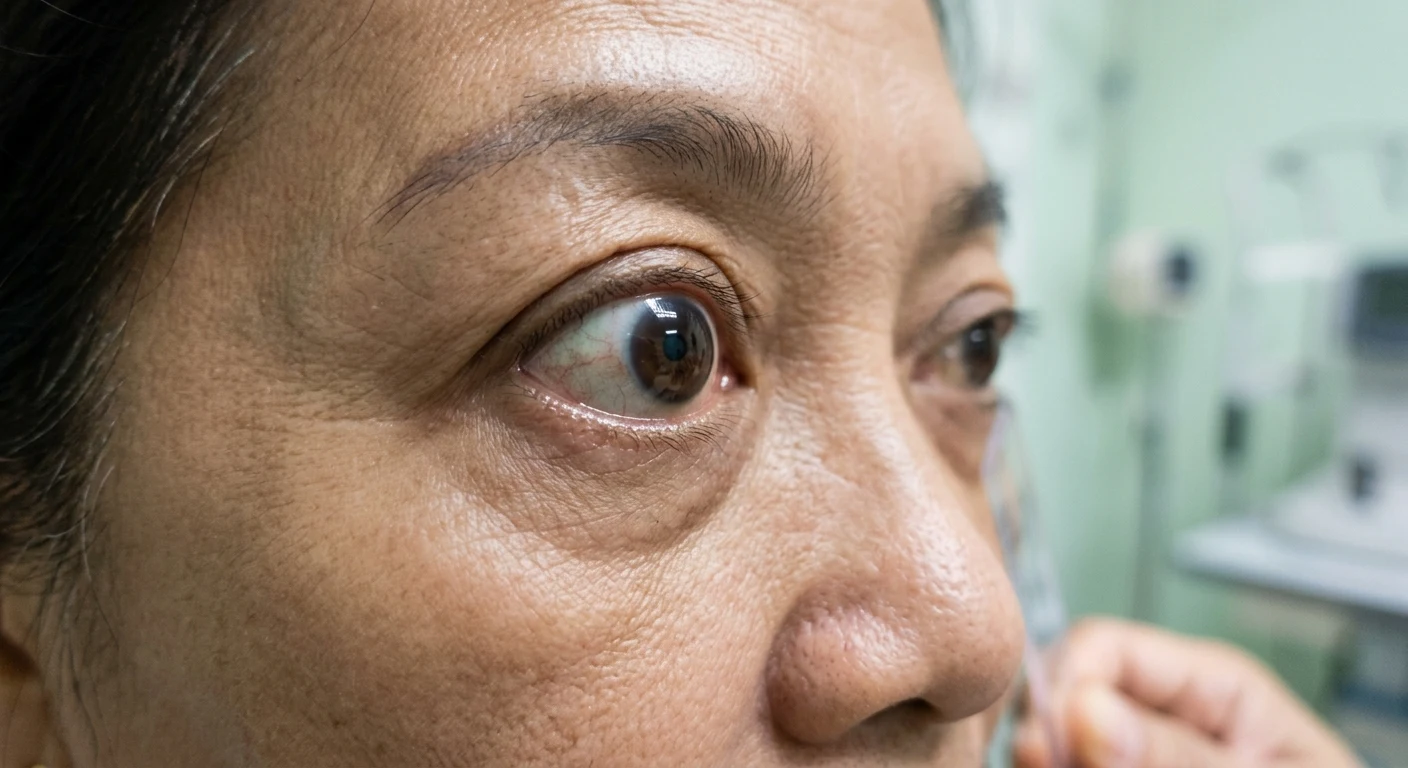
No. Thyroid eye disease is a common cause of bulging eyes in adults. Orbital tumours, orbital infection, trauma and pseudo-proptosis from high myopia can all produce a similar appearance, which is why an eye specialist assesses the pattern of onset, whether one or both eyes are affected, and any associated symptoms before assuming a thyroid cause.
Why Unilateral and Bilateral Proptosis Are Assessed Differently
Whether one eye or both eyes are affected, and how quickly the change appeared, narrows the list of likely causes before any test is done.
Sudden (Acute) Onset, Why It’s a Same-Day Concern
Proptosis that develops over hours to days, especially with pain, redness or fever, points towards orbital infection, bleeding behind the eye, or trauma, and needs same-day ophthalmic review. Acute, painful bulging is treated as an emergency until proven otherwise, because delaying treatment for orbital cellulitis or an expanding orbital haemorrhage can threaten both vision and, rarely, life.
Gradual (Chronic) Onset, Tumours and Slow-Growing Causes
Bulging that develops slowly over months, without significant pain, is more typical of thyroid eye disease or a slow-growing orbital tumour. Gradual onset is generally less urgent than sudden proptosis, but it still needs a proper work-up to identify the cause before it affects vision, eye movement or the ability to close the eyelids fully.
When Should You See an Eye Specialist About Bulging Eyes?
Some symptoms alongside bulging eyes should prompt an urgent visit rather than a wait-and-see approach.
Red Flag Symptoms That Need Urgent Attention
- Sudden bulging of one or both eyes, especially with pain
- Reduced or blurred vision, or a change in colour vision
- Double vision or restricted eye movement
- Fever, redness or swelling around the eye
- Inability to fully close the eyelid
- A history of recent facial trauma
How It Is Diagnosed and What Are The Treatment Options
Establishing the underlying cause is the first step. Treatment then targets that specific cause rather than the bulging on its own.
Clinical Assessment and Orbital Imaging (CT/MRI)
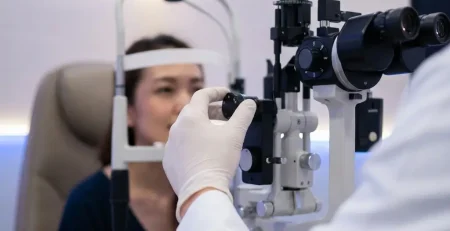
Assessment begins with a detailed clinical examination, including exophthalmometry, visual acuity testing, eye movement assessment and a check for optic nerve compression. Where the cause is not clear from the clinical picture, CT or MRI imaging of the orbit shows the eye socket, muscles and any mass lesion, helping confirm whether the cause is thyroid-related, a tumour, an infection or a structural variation such as pseudo-proptosis.
Orbital Surgery and Decompression for Structural Causes
Where bulging is caused by a structural problem, such as an orbital tumour or stable thyroid eye disease that has left the eye socket permanently crowded, orbital decompression surgery can create additional space within the bony orbit, allowing the eye to settle back and relieving pressure on the optic nerve where present. Surgical planning for tumours depends on the type, size and position of the growth, while infection is treated urgently with antibiotics before any surgery is considered. These procedures address a functional problem rather than an appearance-only concern, and are assessed and planned on clinical grounds.
Why Choose Dr Roy Tan at Cornerstone Eye Centre
Dr Roy Tan is a Consultant Ophthalmologist fellowship-trained in Oculoplastic and Orbital Surgery, with particular experience differentiating the many causes of bulging eyes beyond thyroid eye disease. If you have noticed a change in how prominent one or both of your eyes appear, a comprehensive assessment can identify the cause and guide the right next step. Schedule a clinical eye assessment with Dr Roy Tan at Cornerstone Eye Centre to discuss your symptoms and treatment options.
Take the Next Step
Early detection and treatment are crucial to safeguarding your vision from the irreversible damage.
Book the Comprehensive $88 Cataract & Glaucoma Screening.
Book a Cataract & Glaucoma Screening for $88
Don’t wait for symptoms to appear before taking action. Early detection is key to preserving your vision.
At Dr Roy Tan’s clinic, we offer a comprehensive Cataract & Glaucoma Screening for just $88. This screening is designed to assess your eye health thoroughly, identify any early indicators of glaucoma or cataracts, and discuss your personalised options if either condition is detected.