Why Regular Eye Screening is Crucial After Age 40 in Singapore
Key Takeaway (TL;DR)
This article highlights why turning 40 is a critical milestone for your vision, as natural ageing increases the risk of “silent” diseases like glaucoma and macular degeneration. While “lao hua” is common, many serious conditions show no early symptoms. The key takeaway? A professional medical check-up is the only way to prevent permanent vision loss. You should book a comprehensive eye screening in Singapore with Dr Roy Tan today to protect your sight for the future.
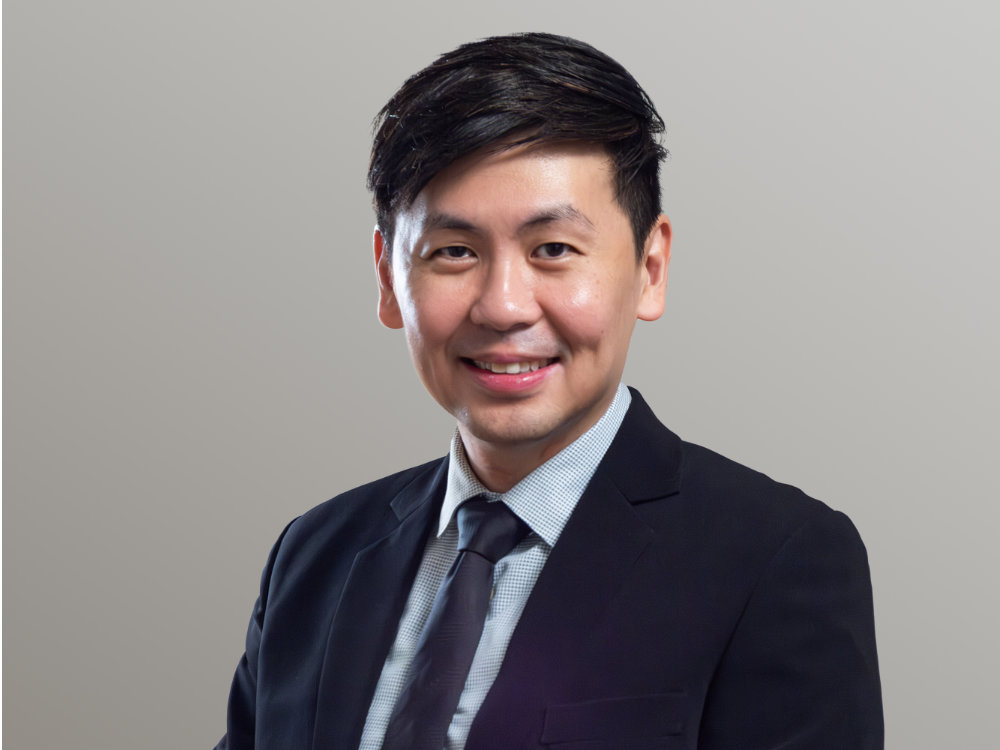
Dr Roy Tan
Eye Specialist & Ophthalmologist | Asian Healthcare Specialists
Providing comprehensive diagnostic evaluations, advanced medical eye care, and personalised treatments for conditions ranging from cataracts to glaucoma.
Introduction
Have you ever found yourself holding a restaurant menu just a little bit further away than you used to? Or maybe you’ve caught yourself squinting at your phone screen in the morning? If you’re hitting the big 4-0, these little moments aren’t just a sign of “getting older”—they are your eyes’ way of telling you the game has changed.
In Singapore, we often joke about “lao hua” (presbyopia) as a rite of passage. But while needing reading glasses is a nuisance, there are far more “silent” changes happening inside your eyes that don’t give you a warning. This is exactly why an eye check-up after 40 needs to move from your “someday” list to your “now” list.
The Ageing Eye: What Actually Happens When You Turn 40?
Think of your eyes like a high-end camera. For the first few decades, the autofocus is lightning-fast. But once you hit 40, the lens inside your eye starts to lose its flexibility. This is presbyopia. It’s perfectly natural, but it’s often the first sign that the structural integrity of your eye is shifting.
Beyond just the lens, the internal “plumbing” of your eye—how it manages fluid and pressure—can also start to slow down. The tissues at the back of your eye, like the retina, become more susceptible to wear and tear. Turning 40 is essentially the “mileage marker” where your eyes require a more detailed maintenance check than a simple vision test for new glasses.
The “Silent Thieves” of Sight: Why Waiting for Symptoms is Too Late
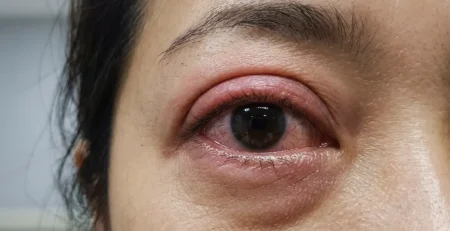
The scariest thing about eye diseases? Many of them are “asymptomatic.” That’s a fancy medical way of saying they don’t hurt and they don’t blur your vision until it’s almost too late to fix. This is why comprehensive eye screening in Singapore is a literal lifesaver for your sight.
Glaucoma: The Silent Blinding Disease
Glaucoma is often called the silent thief of sight because it sneaks up on your peripheral vision first. By the time you notice you’re losing vision, a significant portion of your optic nerve might already be damaged. A specialist check measures your intraocular pressure (IOP) to catch this before the damage is permanent.
Age-Related Macular Degeneration (AMD)
Imagine trying to look at a friend’s face and only seeing a dark smudge in the centre, while the edges remain clear. That’s AMD. It affects your central vision, which is crucial for reading and driving. Early detection through a dilated eye exam can help manage this before it steals your independence.
Diabetic Retinopathy
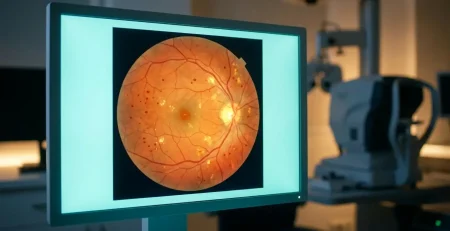
With Singapore’s high rates of diabetes, this is a major concern. High blood sugar can cause the tiny blood vessels in your retina to leak or bleed. If you have any history of high blood sugar, a diabetic eye test in Singapore isn’t optional—it’s essential.
Cataracts: Clouding Your Golden Years
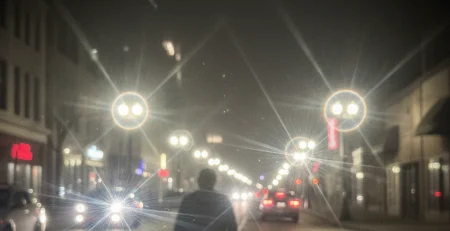
While cataracts usually peak later in life, the “seeds” are often sown in your 40s and 50s. If you notice colours looking a bit dull or you’re struggling with glare while driving at night, it might be the early stages of lens clouding.
Optical Shop vs. Eye Specialist: Where Should You Get Screened?
It’s tempting to think that the 10-minute check at the local spectacle shop is enough. But there is a massive difference between a “vision screening” for glasses and a medical ophthalmologist eye screening in Singapore.
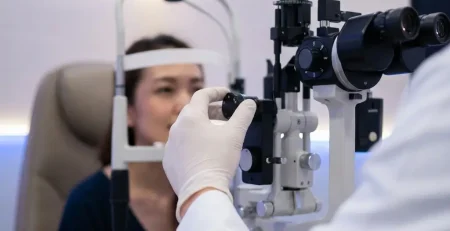
An optical shop checks if you need a new prescription. An ophthalmologist like Dr Roy Tan checks if your eyes are healthy. We use advanced technology like Optical Coherence Tomography (OCT)—essentially an ultrasound for your eye—to look through the surface and see the layers of your retina and optic nerve in high definition. You wouldn’t ask a tyre shop to perform an engine overhaul; the same logic applies to your eyes.
What to Expect During a Comprehensive Eye Screening with Dr Roy Tan
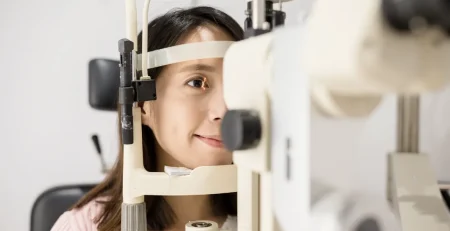
We know that medical appointments can feel daunting, but a screening with Dr Roy Tan is designed to be thorough yet comfortable. Here’s a quick roadmap:
| Screening Step | What It Involves |
|---|---|
| Visual Acuity & Refraction | We check your vision at all distances. |
| Eye Pressure Test | A quick, painless check for glaucoma risks. |
| Dilation | We use special drops to widen your pupils, allowing Dr Roy to see the very back of your eye clearly. |
| Retinal Evaluation | Using the latest scans, we look for signs of AMD, diabetic retinopathy, or retinal thinning. |
By the end of the session, you won’t just have a prescription; you’ll have a comprehensive eye health report.
Frequently Asked Questions (FAQs)
How often should I check my eyes after 40?
For most adults over 40, a comprehensive exam every 1 to 2 years is recommended. However, if you have high blood pressure, diabetes, or a family history of eye disease, Dr Roy may suggest more frequent visits.
Does an eye screening hurt?
Not at all! Most tests are non-contact. The dilation drops might make your vision a bit blurry and your eyes sensitive to light for a few hours, so we recommend bringing sunglasses and avoiding driving immediately after.
I have perfect 6/6 vision, do I still need an eye check?
Yes! As we mentioned, many of the most serious eye conditions (like early glaucoma) do not affect your 6/6 central vision until the very late stages. “Seeing well” doesn’t always mean “eye healthy.”
Will my insurance cover eye screenings in Singapore?
Many private insurance plans and corporate health screenings cover specialist consultations for medical eye checks. It’s best to check with your provider, or our clinic staff can assist you with the necessary paperwork.
Don’t Take Your Sight for Granted—Book Your Screening Today
Your eyes are your windows to the world. They let you see your children grow, enjoy the beauty of a Singaporean sunset, and stay productive in your career. After 40, those windows need a professional inspection to stay clear for the decades to come.
Take the guesswork out of your eye health. Contact Dr Roy Tan’s clinic at Asian Healthcare Specialists to schedule your comprehensive eye screening in Singapore.
Give us a call or fill out our online appointment form today. Let’s make sure your vision stays as sharp as your ambitions!